Day 1,687
Fjords and icefields
After a long day watching the ferries to Villa O'Higgins come and go, finally it was our ferry's turn. The vehicles had to reverse down the slipway and into a narrow lane, a skill that many in a hired campervan struggled with, though the most dramatic sight was watching the guy load his massive lowloader heavily laden with steel girders, just finding enough room reversing amidst all the motorcyclists and campers, all hopefully waiting to see if there was room for them too. Finally he managed to line up and like the pro he is, skillfully slotted his vehicle into place. We didn't clap, we should have done but we just wanted to get on board ourselves.
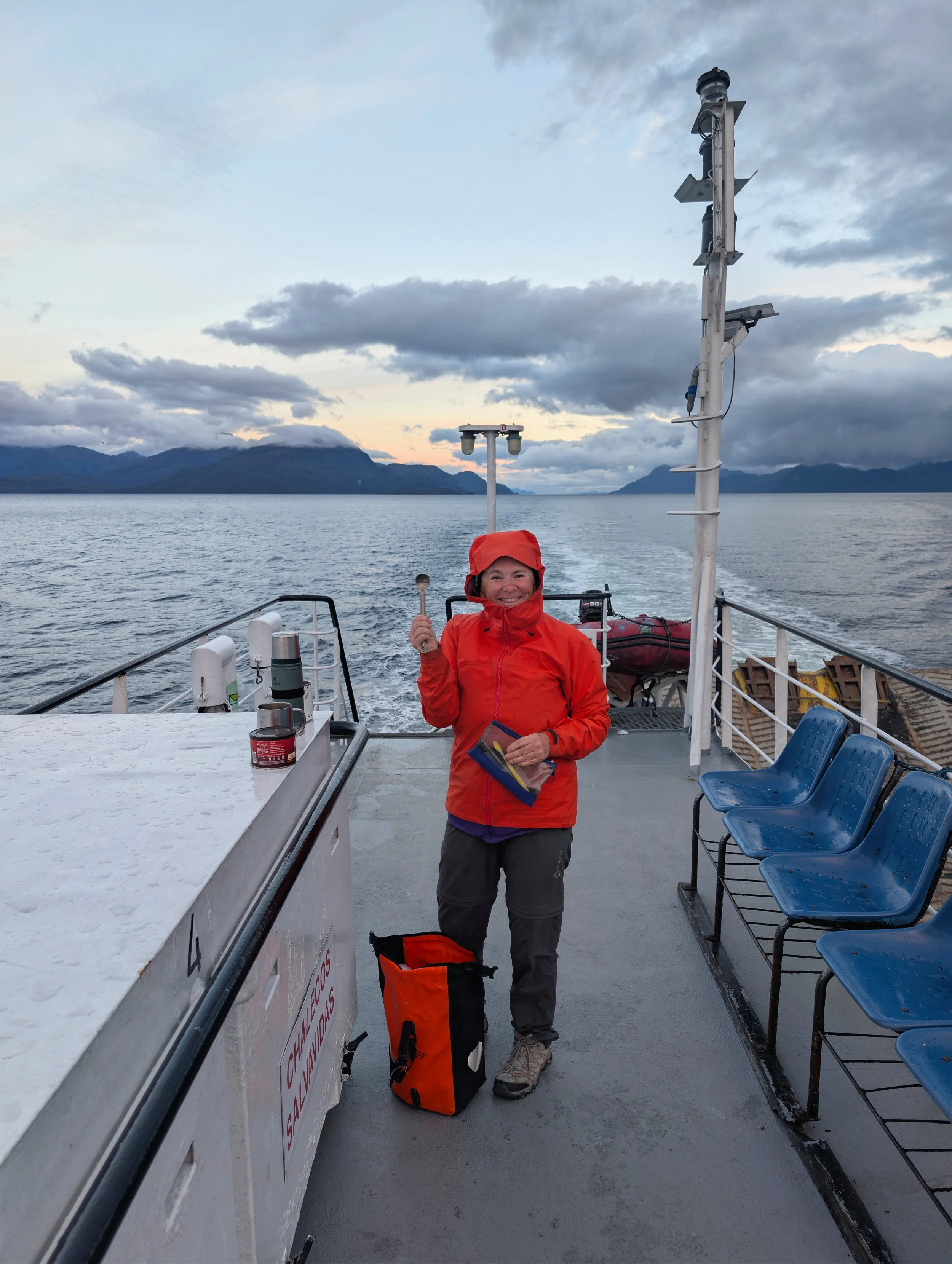
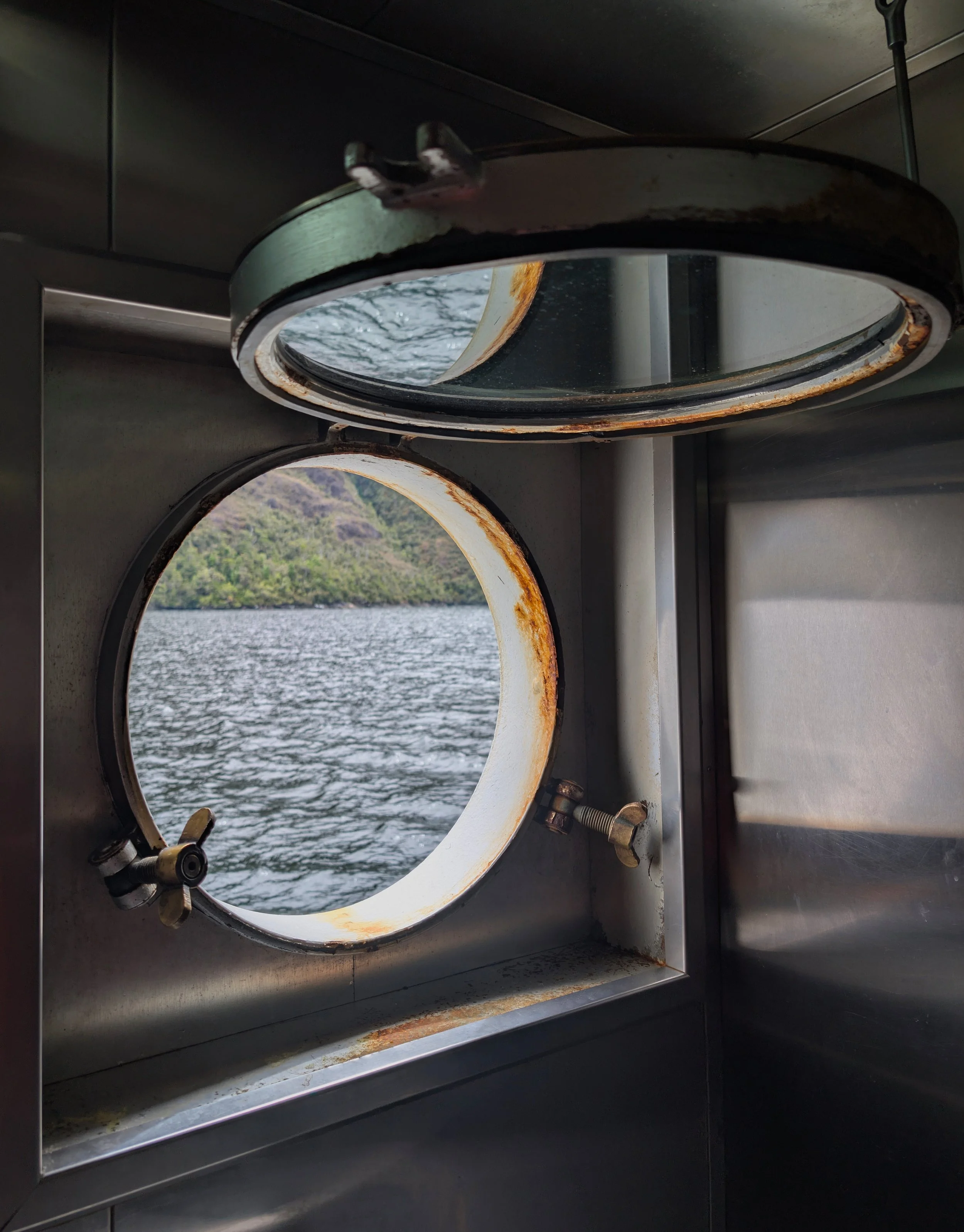
Now I don't want you to imagine we were heading out on a luxury cruise. We were on a car ferry, for around 48 hours through the fjords, taking us to the next road. 70% of the deck space was for vehicles, the remaining 30% was for eating, sleeping, relaxing etc. It was compact, and if you're 6’4” rather than the average height of a guy from Chile, very compact. Tom could barely squeeze between the fixed seats and tables in the dining area, and sleeping was even worse. The seats were actually pretty comfortable and reclined a lot, but your head was almost in the lap of the person behind. It was allowed to sleep in your campervan, so we hoped that the people in front of us would do just that. No such luck, not only did they sleep there with the seat fully reclined through the night (fair enough), but the seats remained in that position for pretty much the whole day too. Tom alternated lying on the floor, staring daggers at the lady in the seat, sitting squashed in his seat in agony or freezing on deck. It was going to be a long 48 hours!
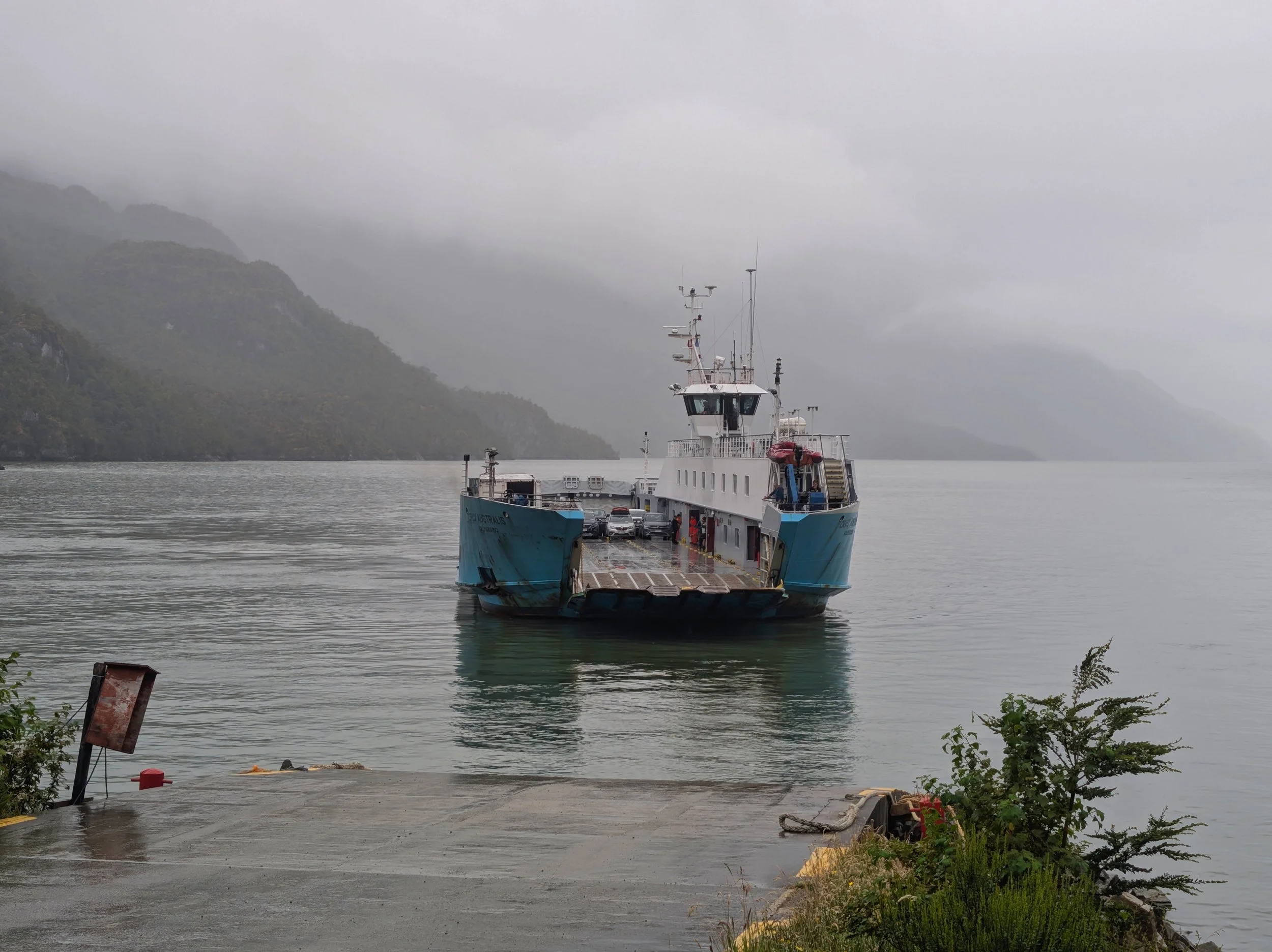
Home for the next 48 hours
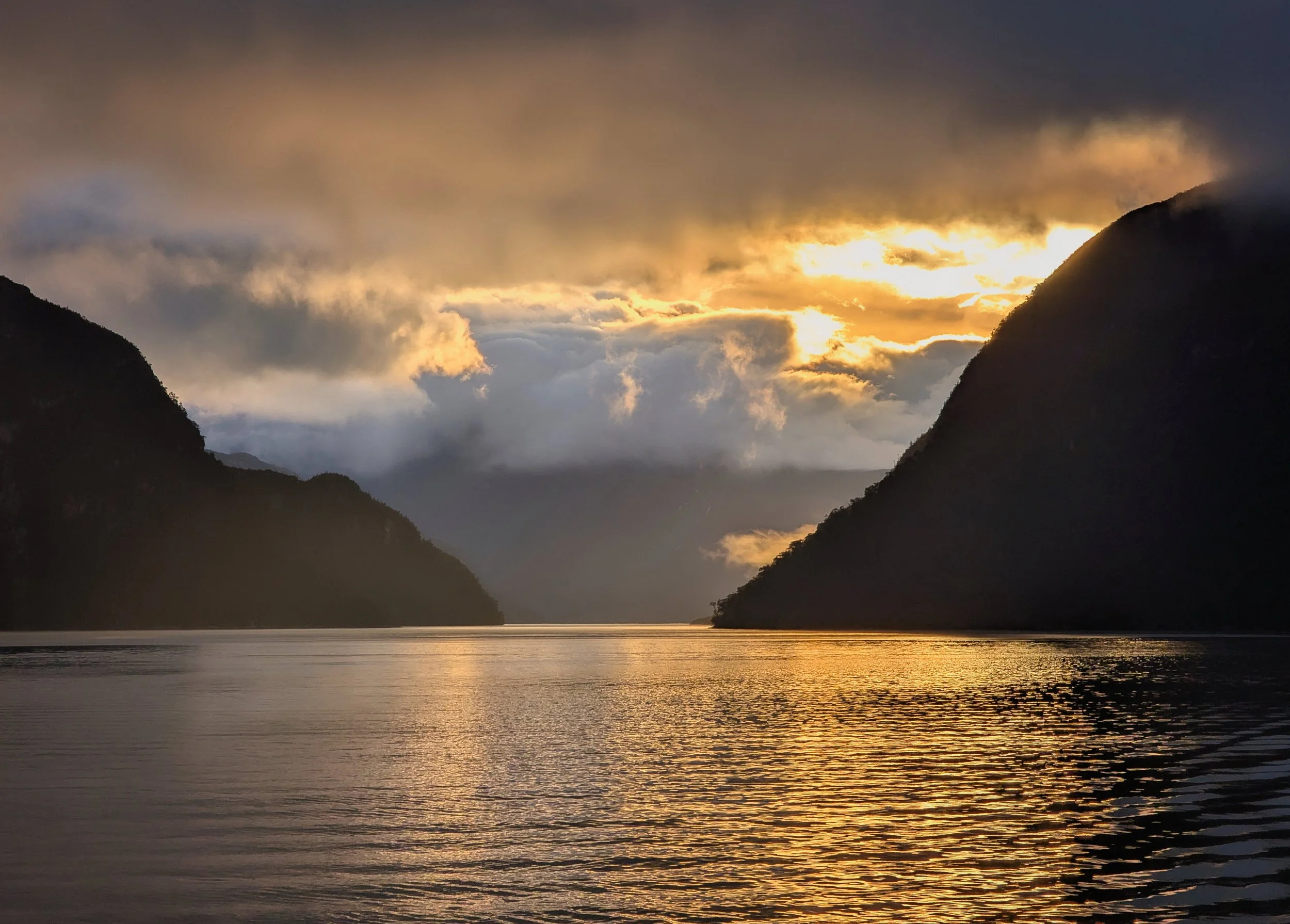
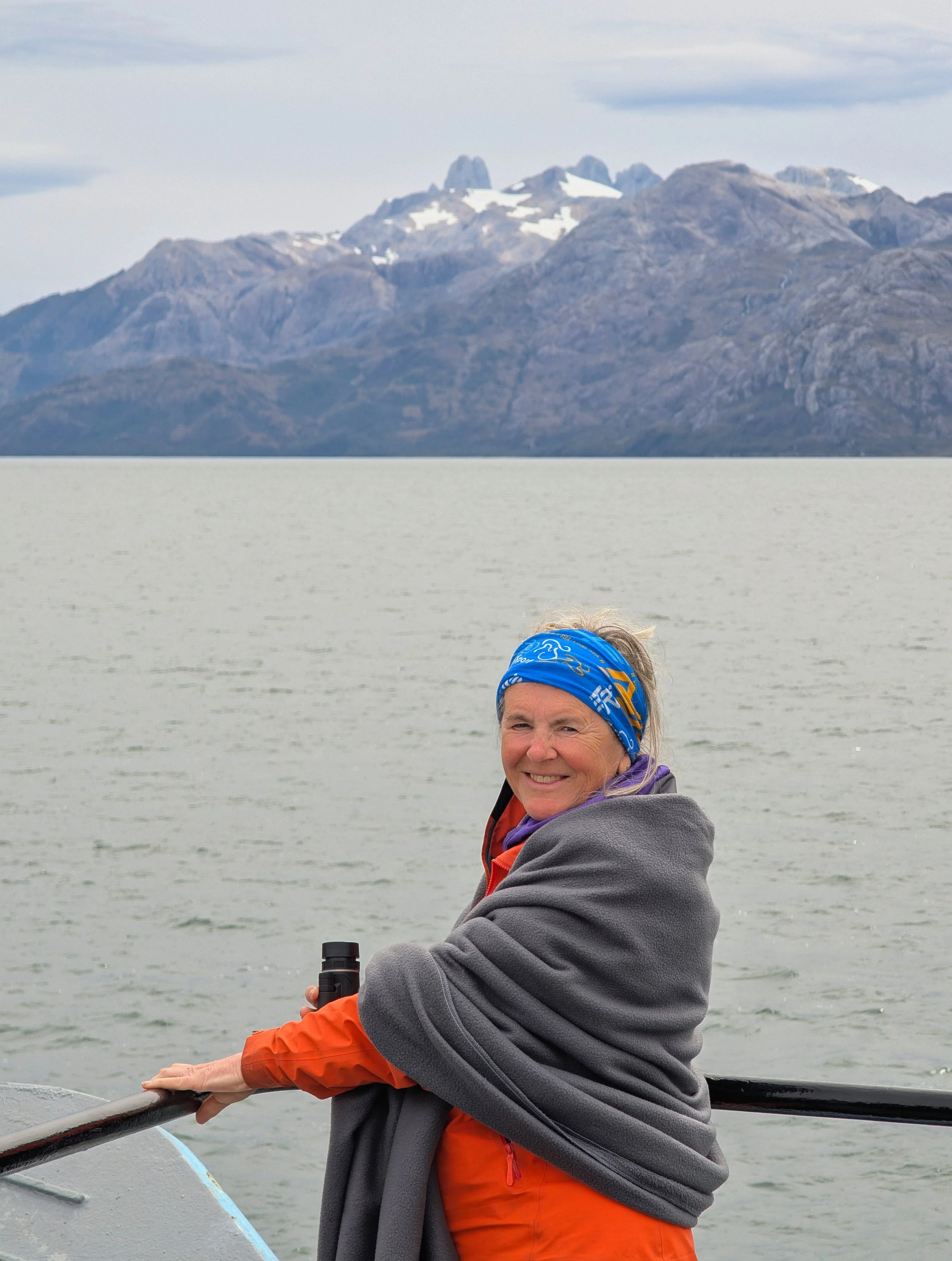
We sailed away from Puerto Younguy on fairly calm waters but with a stormy sky. Over the next couple of hours the clouds slowly cleared and we gathered on deck to gaze around us. This was going to be a beautiful journey, a fitting end to our time in Chile.
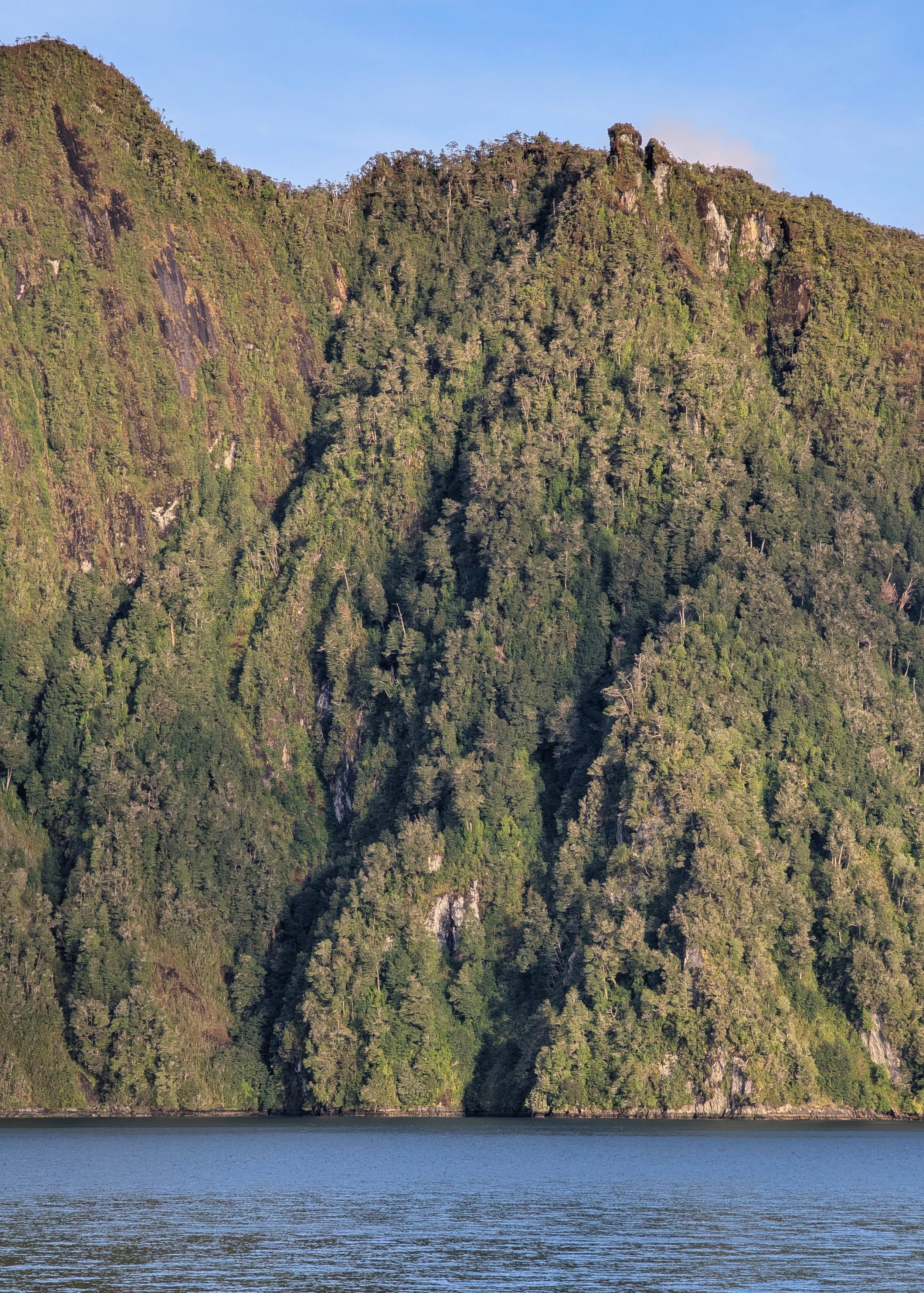
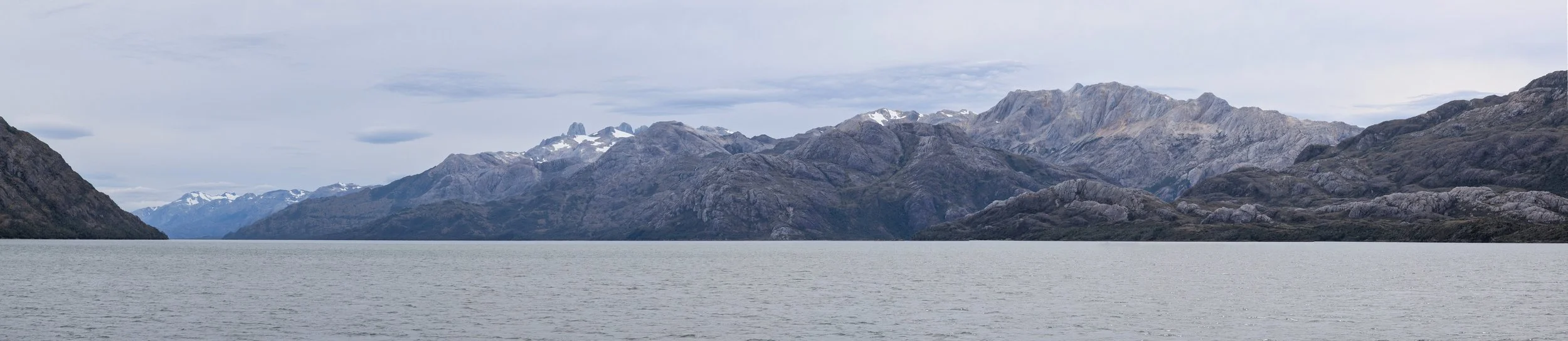
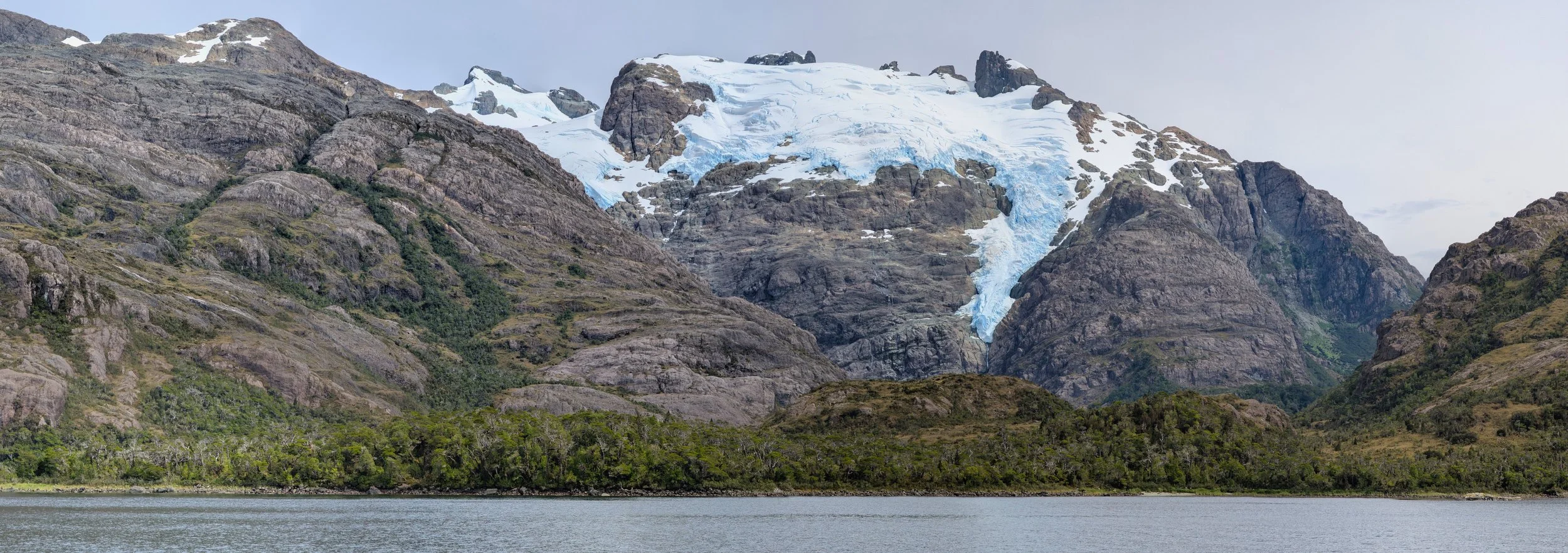
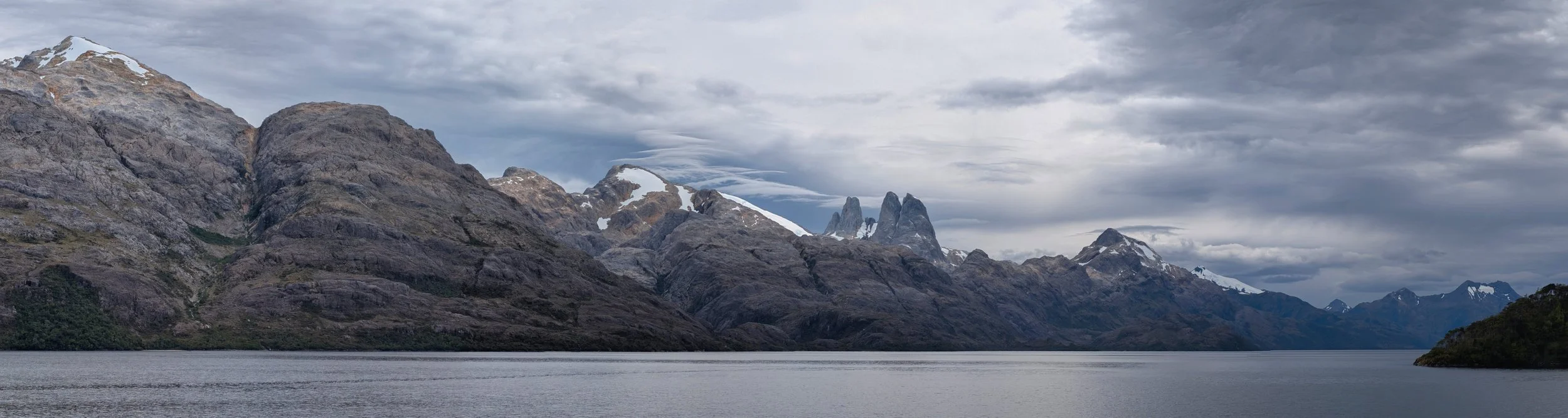
The ferry was taking us between many uninhabited islands, the mountain sides dropping straight into the water below. The hillsides were covered with trees, and as the mountains grew higher and higher, the vegetation stopped and they were topped by snow capped peaks and glaciers. We were sailing close to the Southern Patagonian Icefield and the views became more and more dramatic the further we went.
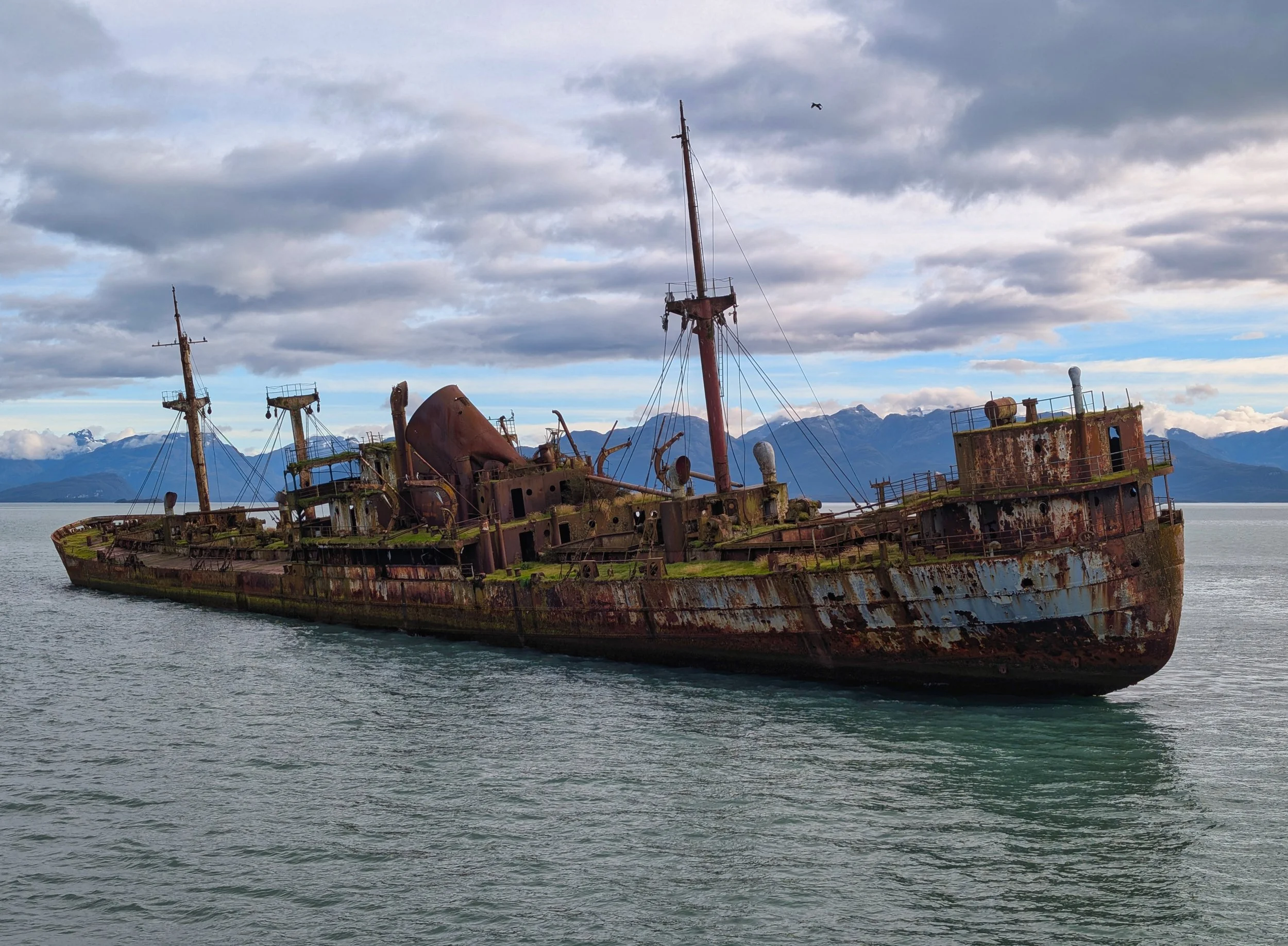
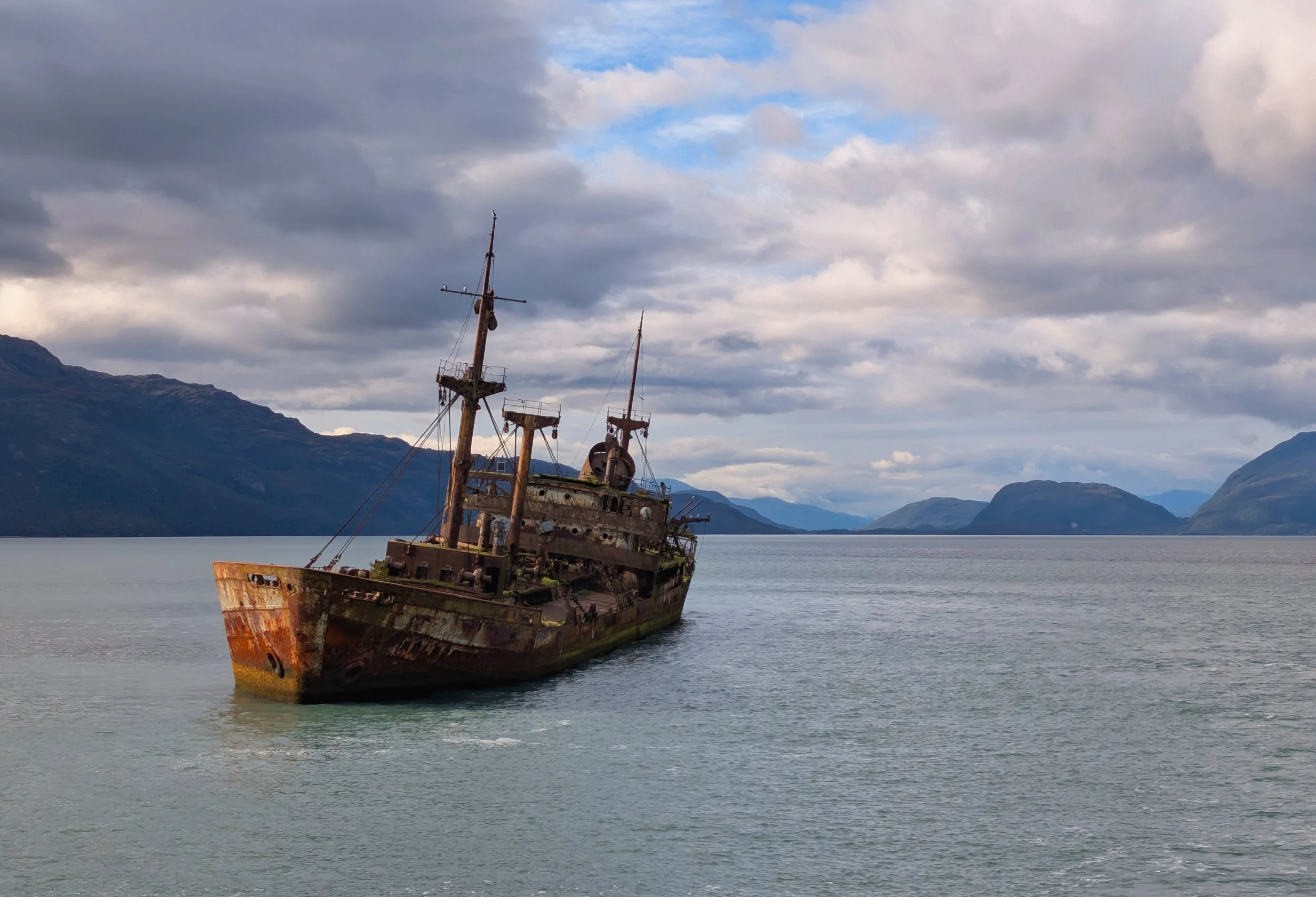
There seemed to be no signs of man at all, until we reached a scuppered trawler. Our captain sailed completely around it, allowing us to see how mother nature was slowly reclaiming it. The deck was covered in a green carpet of vegetation and small plants and trees were sprouting from any surface that they could gain a purchase.
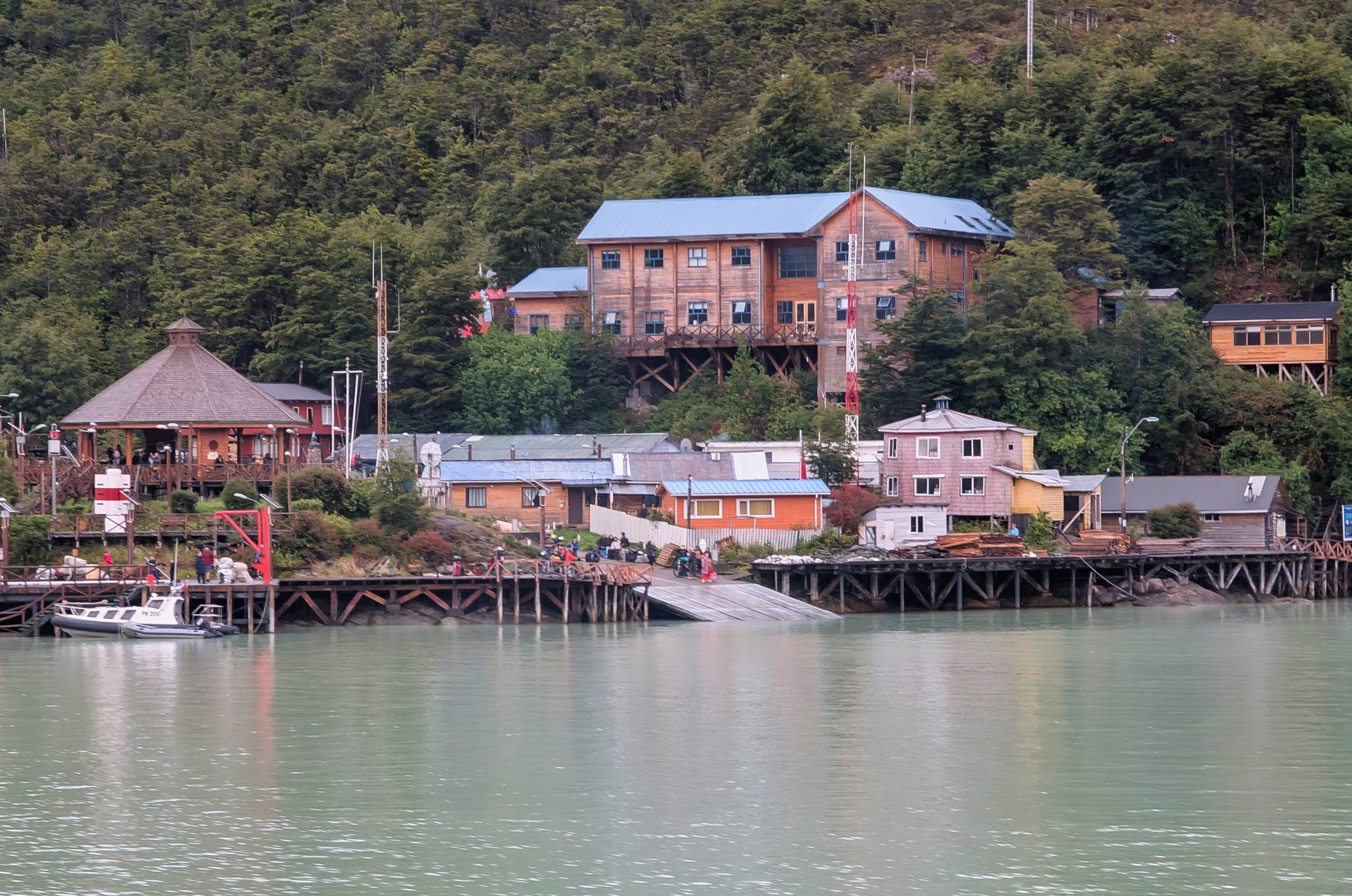
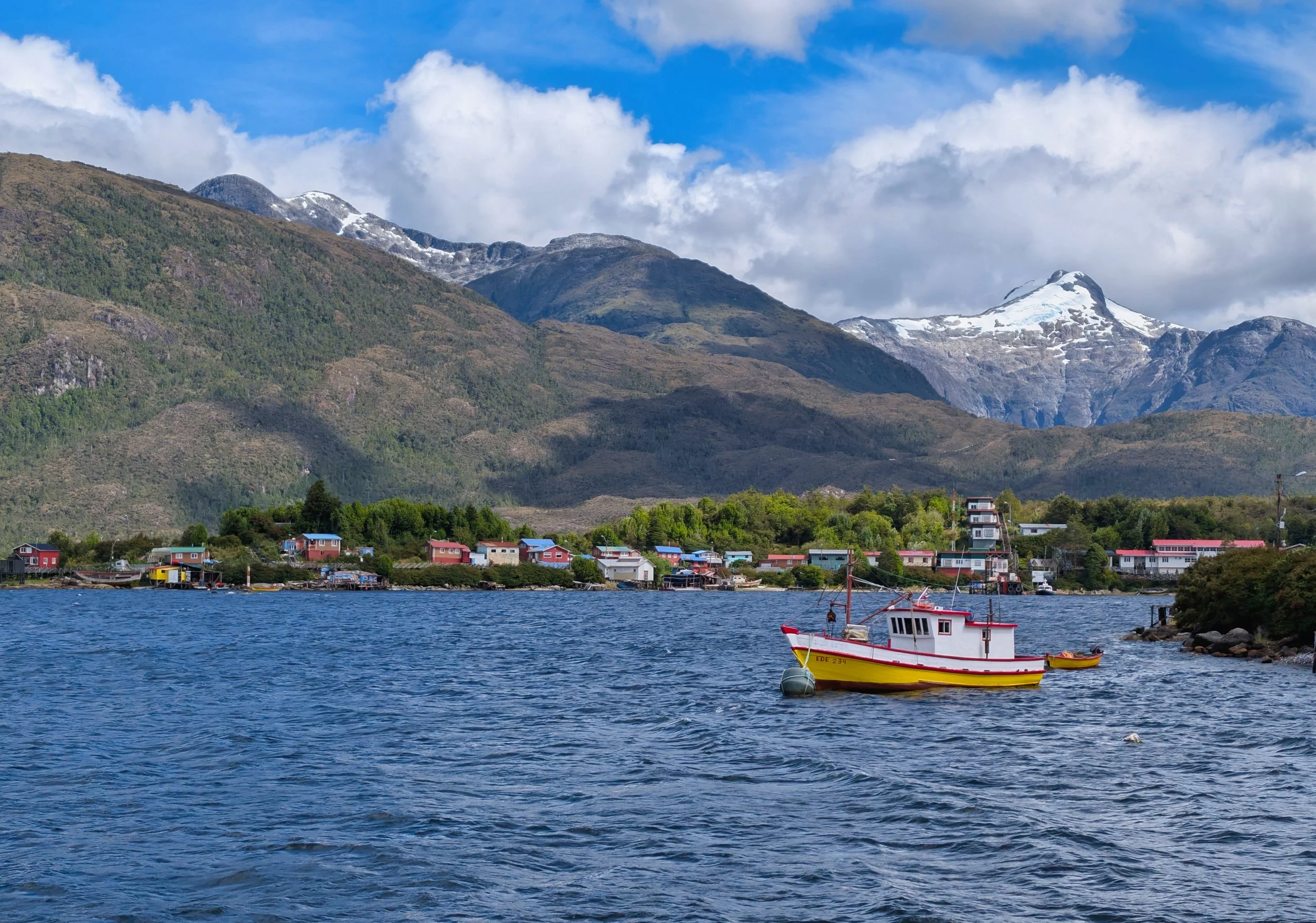
We made two stops on the journey, first to pick up a few hikers and cyclists at the small village of Tortel. It is famous for having no roads, just walkways, we could have cycled there ourselves and seeing the wooden walkways weaving their way along the edge of the building we almost regretted our decision, but we know we can't visit everywhere.
The following day we called at the tiny remote hamlet of Puerto Eden, accessible only by boat, home to the last of the Kawéshker indigenous people. One of the most remote inhabited places in Chile. We were allowed only at the port entrance, where locals sold homemade crafts and even better, sweet and savory snacks. It was good to know that we were helping them earn money to enable them to retain their way of life. The food on the boat was ok, but wow these treats were really needed.
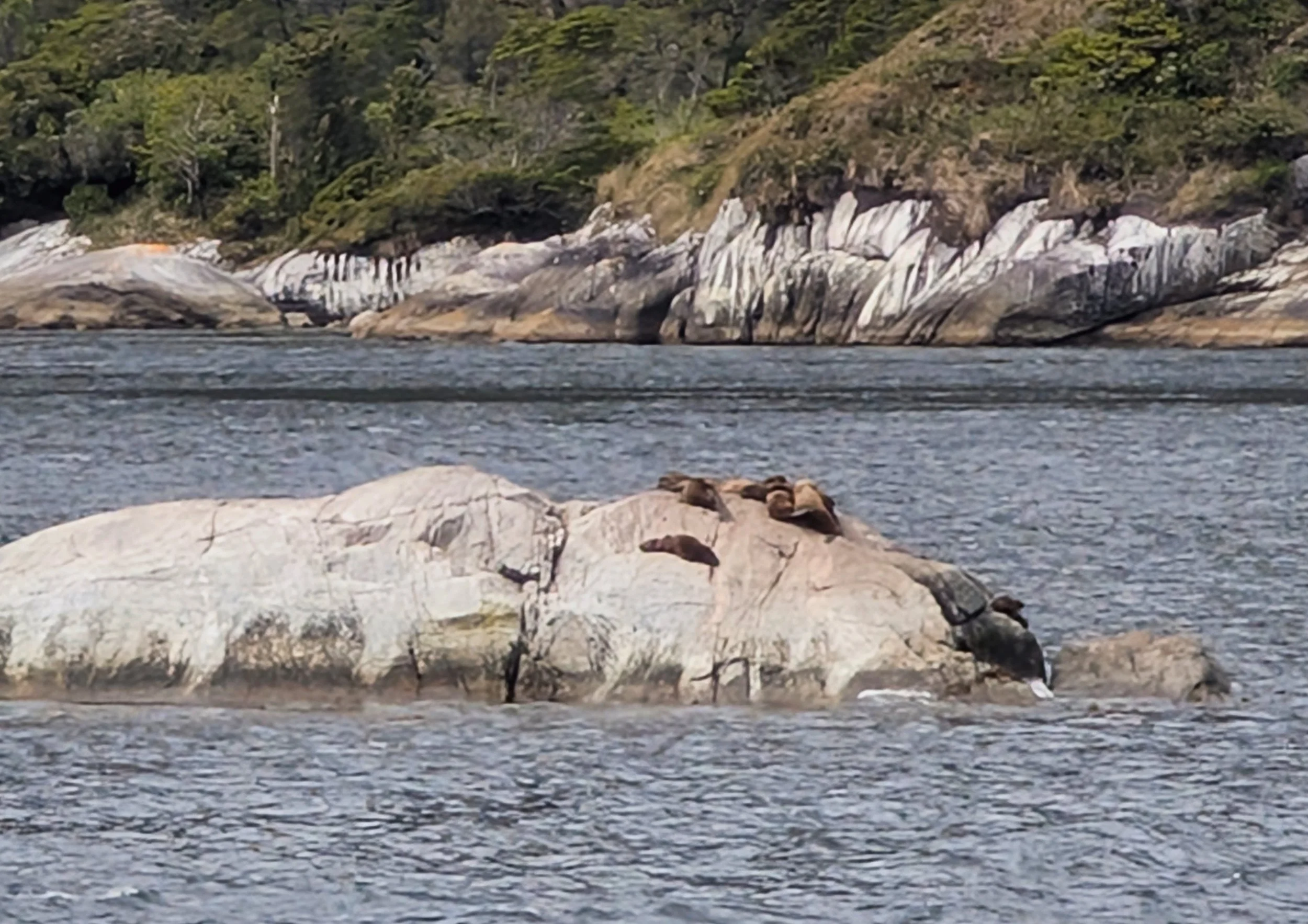
The waters remained calm, which, as I'm not a good sailor as you know, was a great relief. This also enabled us to spot birds sitting on the water, we saw seals swimming, one even jumped high out of the river to gasps of delight from all on board. Tom spotted several seals sunning themselves on a rock, it was only later when he studied the photo in detail that he spotted the skeleton remains of a whale we think, in the background - do you agree?

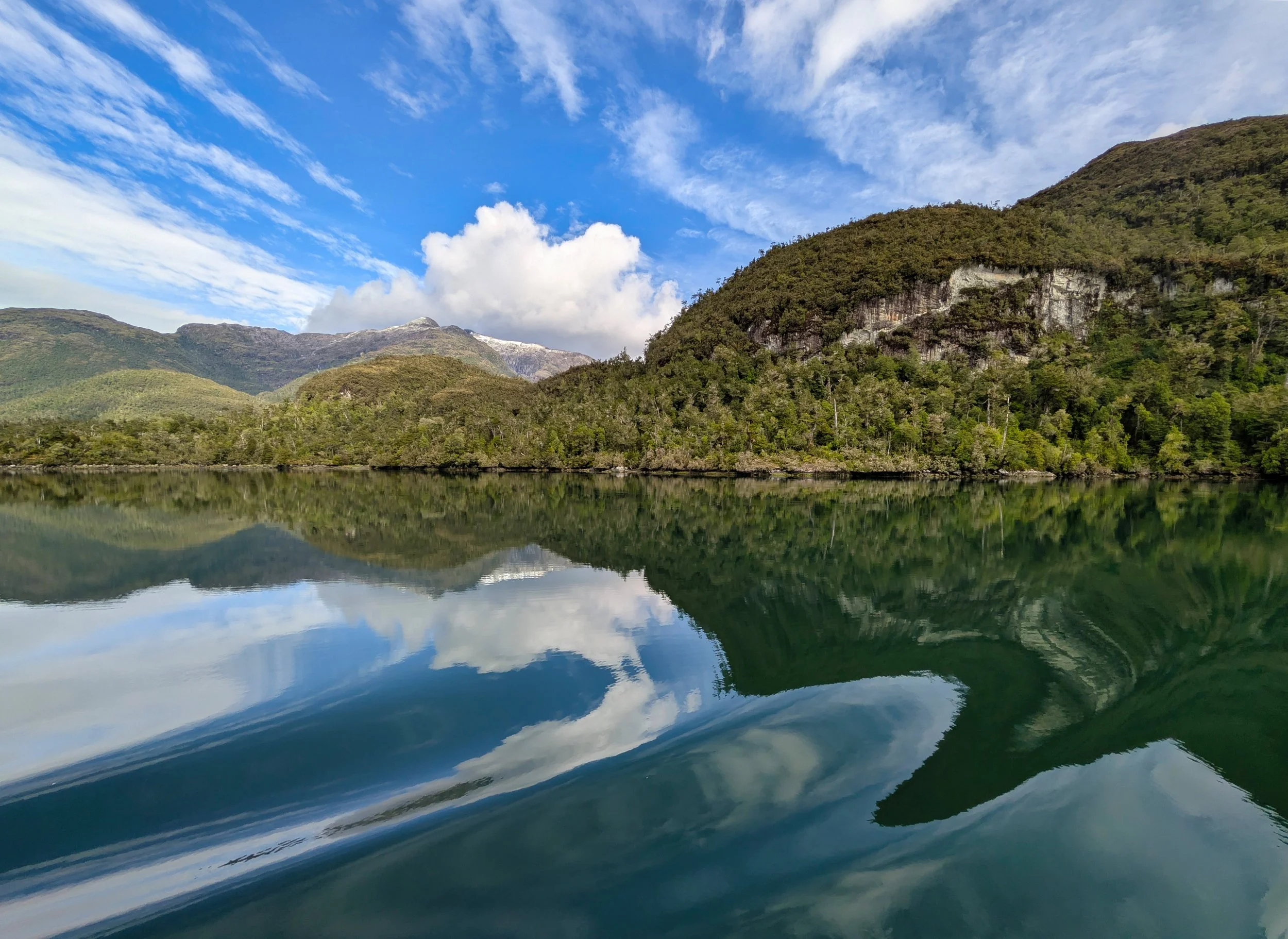
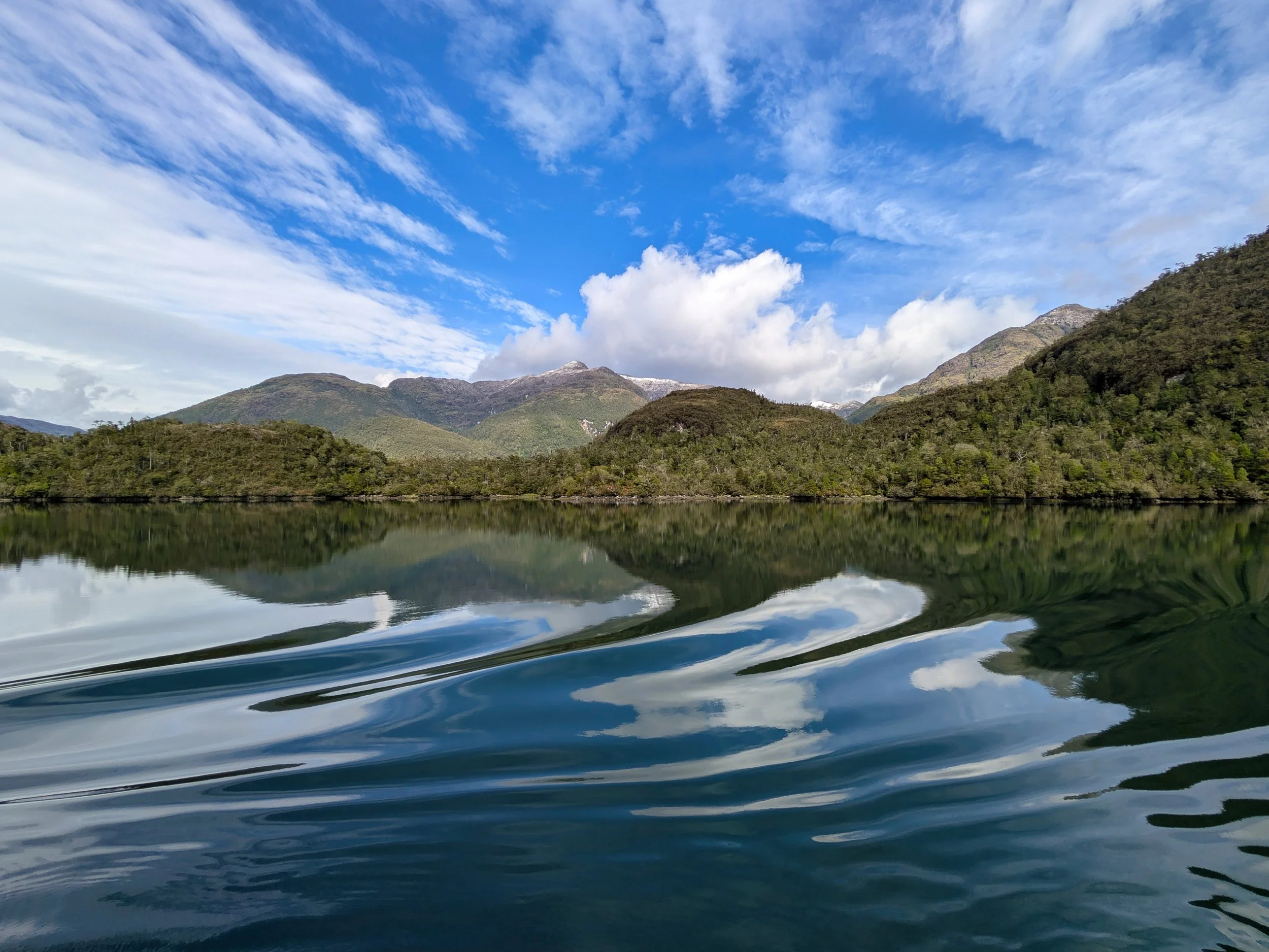
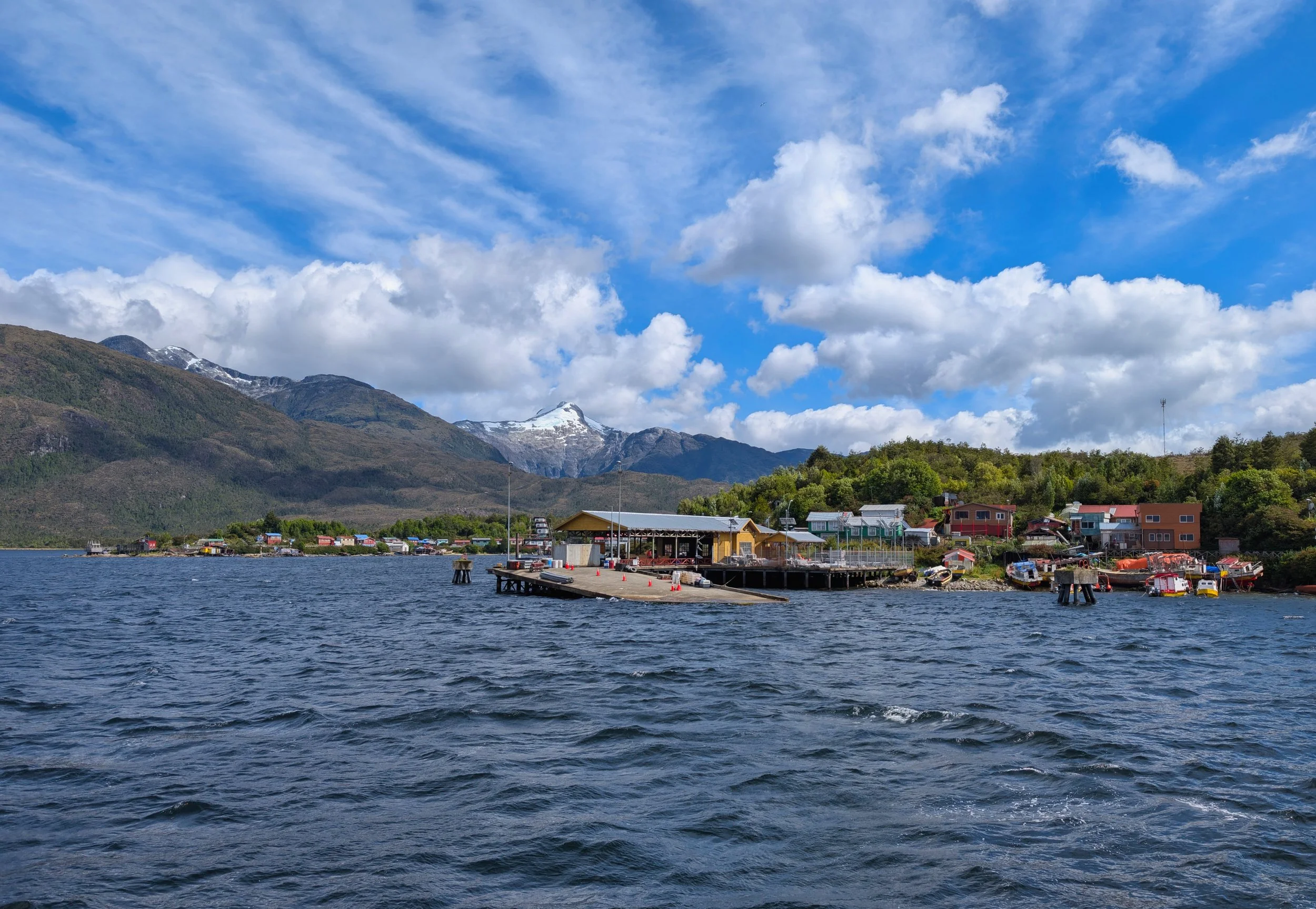
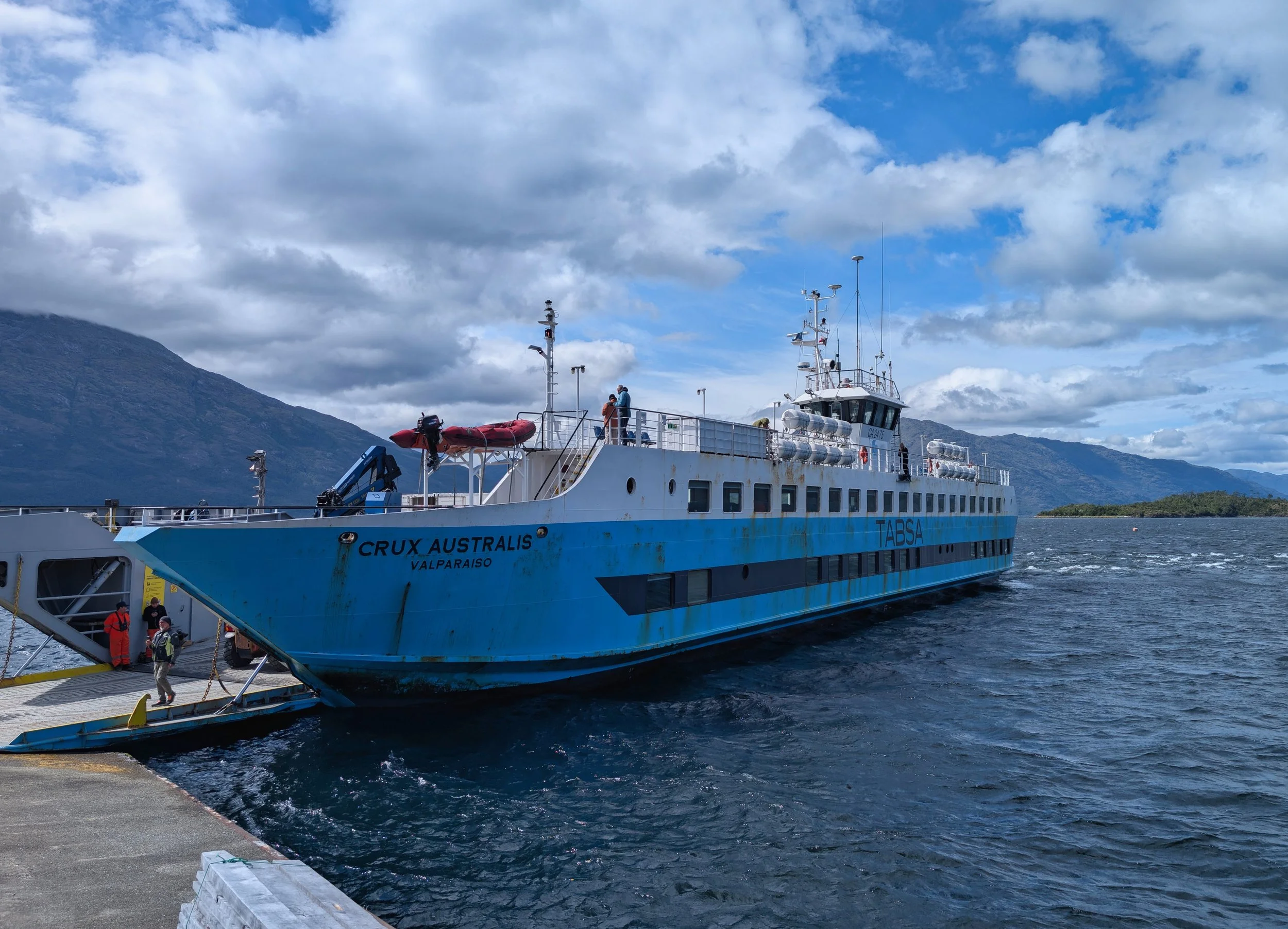
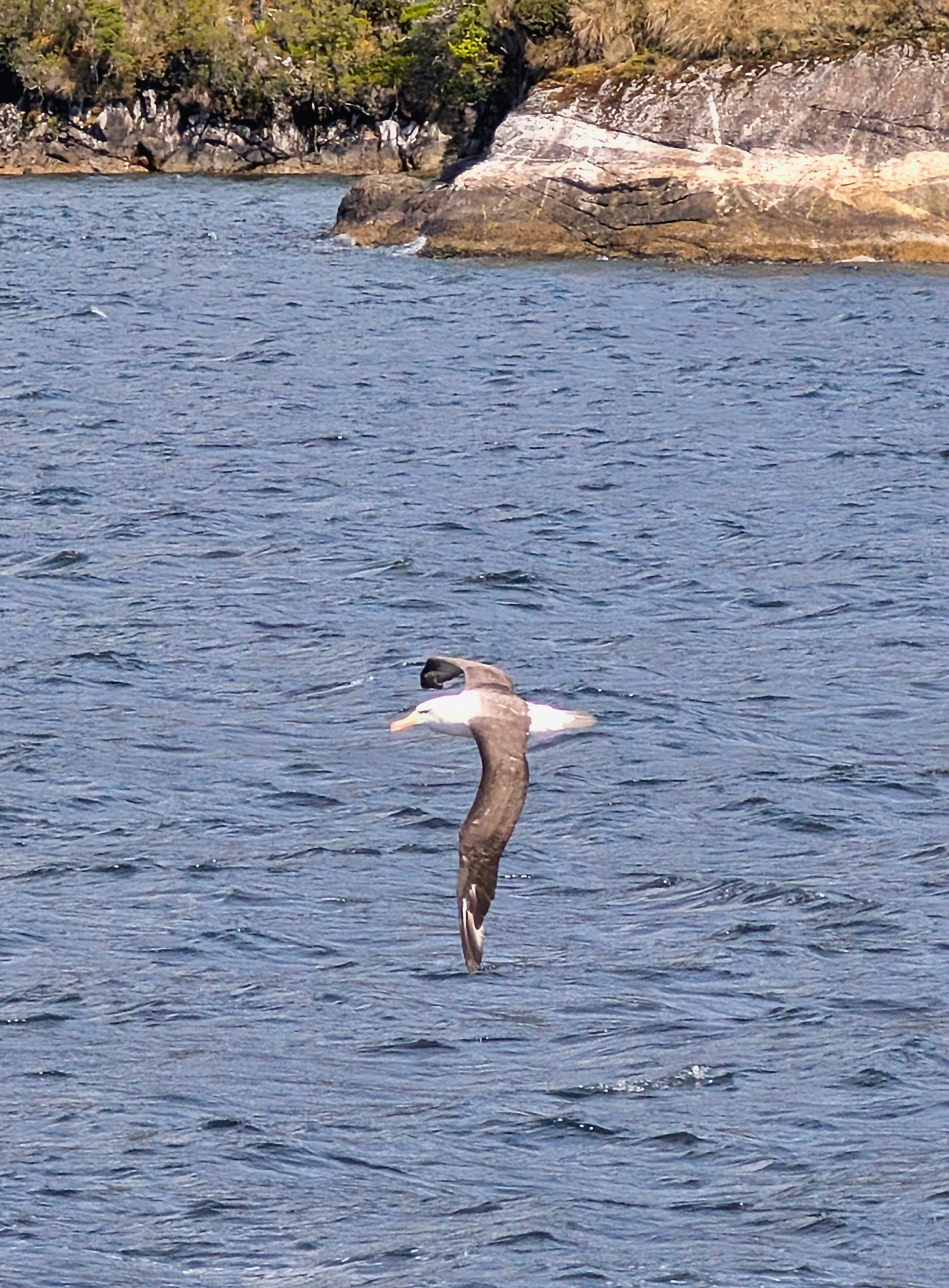
We were lucky to catch glimpses of living orcas swimming not too far from the boat, which was just magical. At one point I was gazing upwards and realized I was staring at an albatross. Having grown up with an English teacher obsessed with Coleridge’s poem, ‘The Rime of the Ancient Mariner’, I finally understood his fascination with this wondrous seabird. Then I spotted a small bird which a fellow traveller assured me was a penguin. This was turning out to be a fantastic journey, but more was to come.
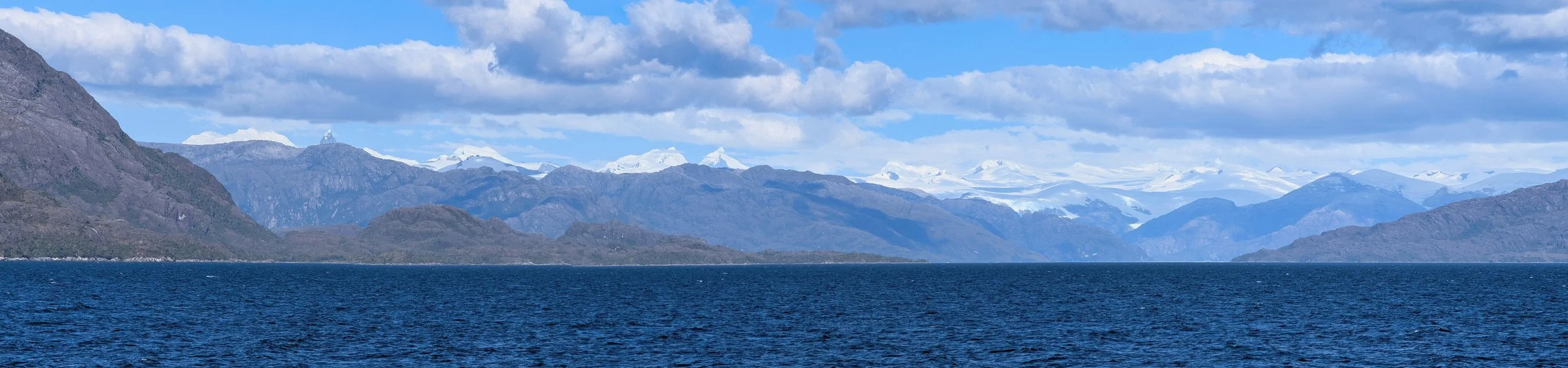
Our first proper view of the Southern Icefield
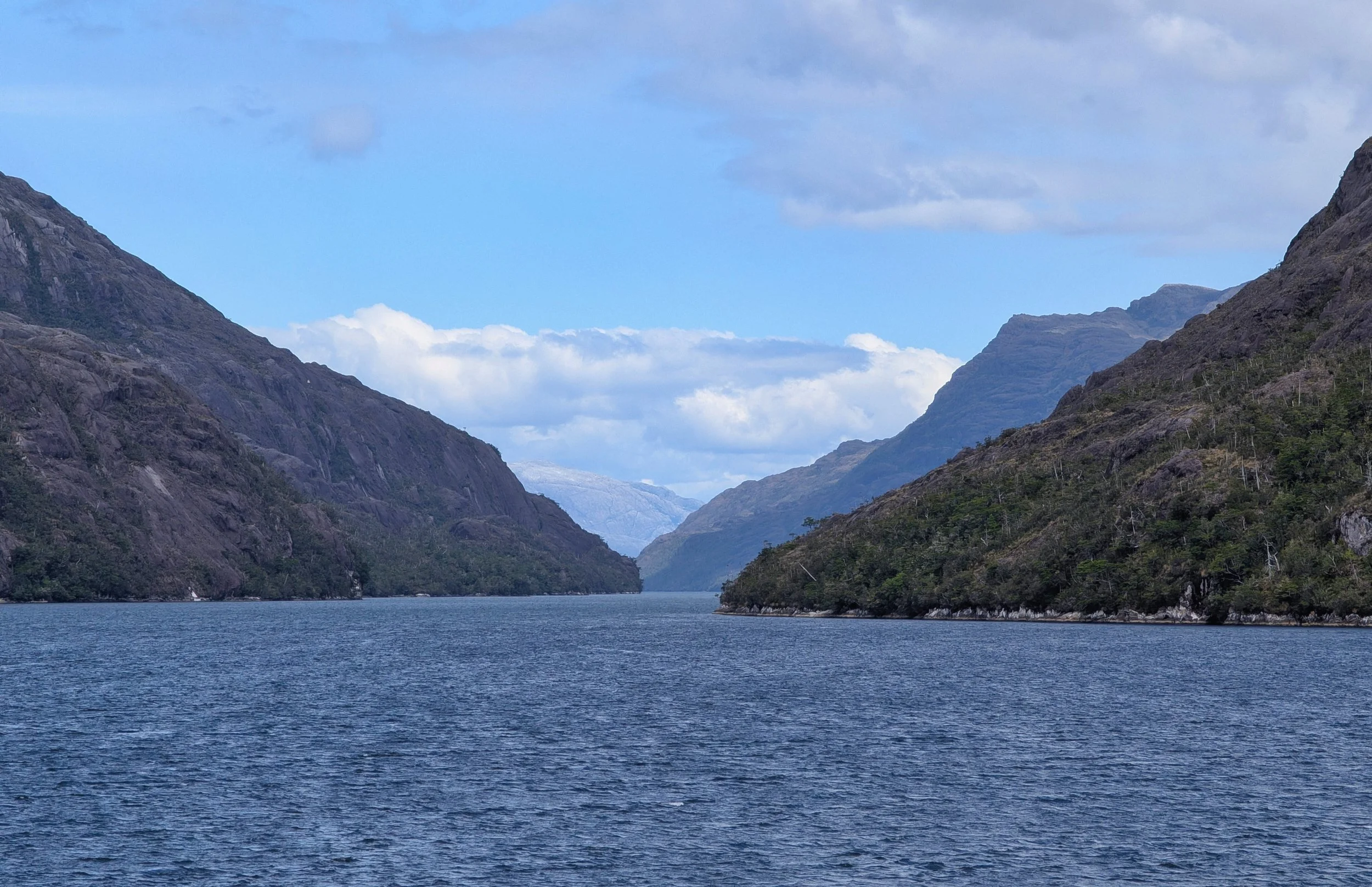
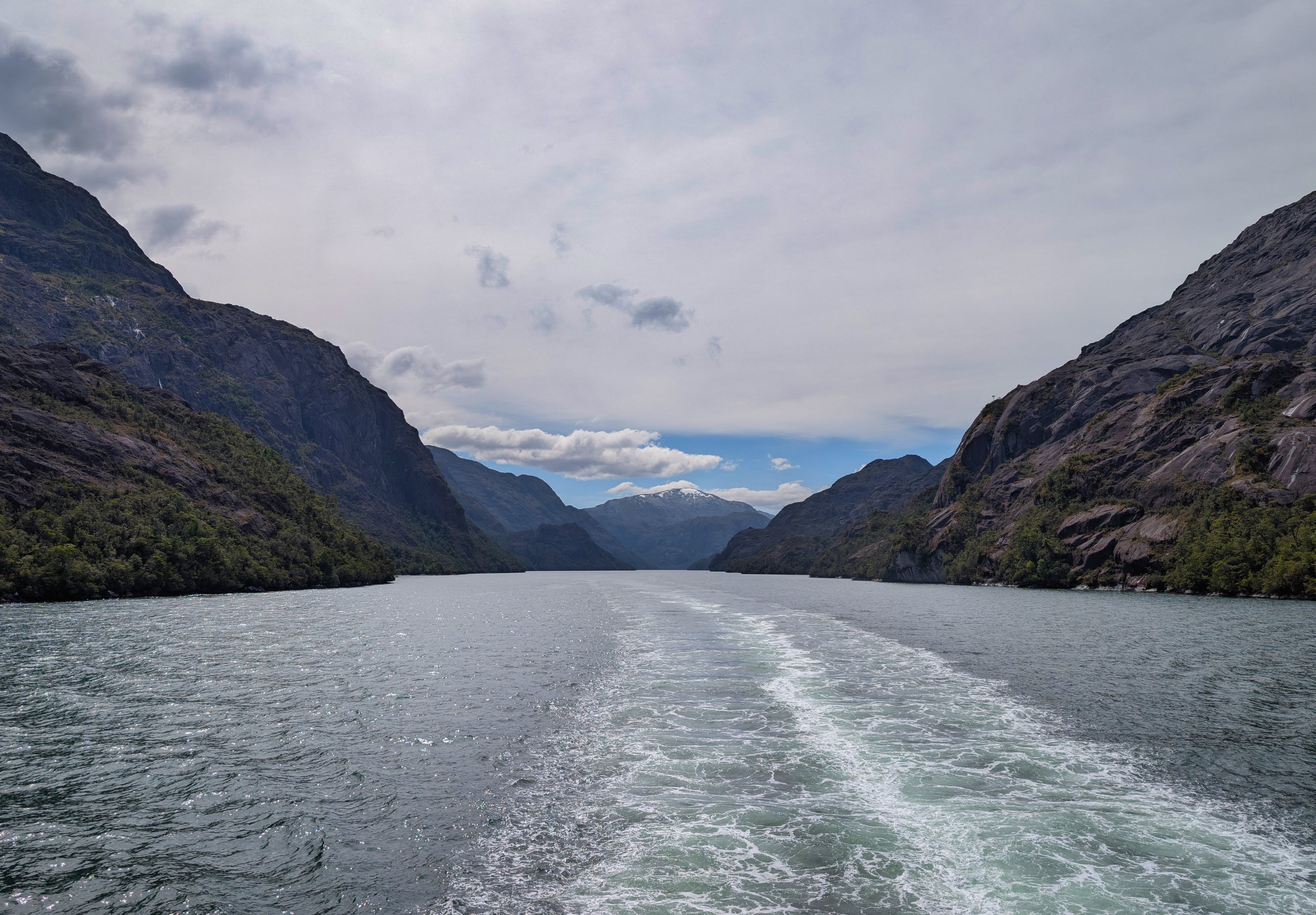
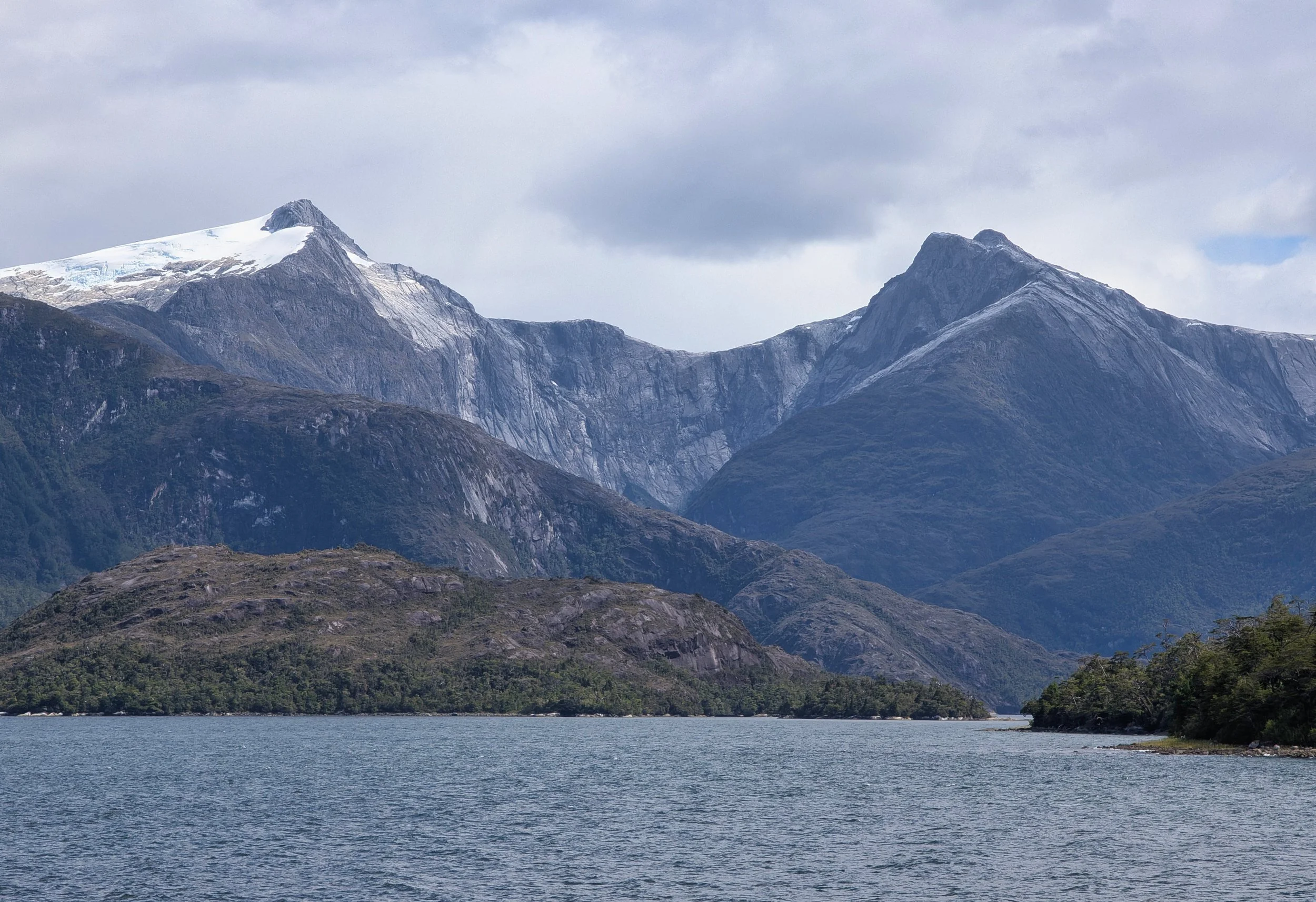
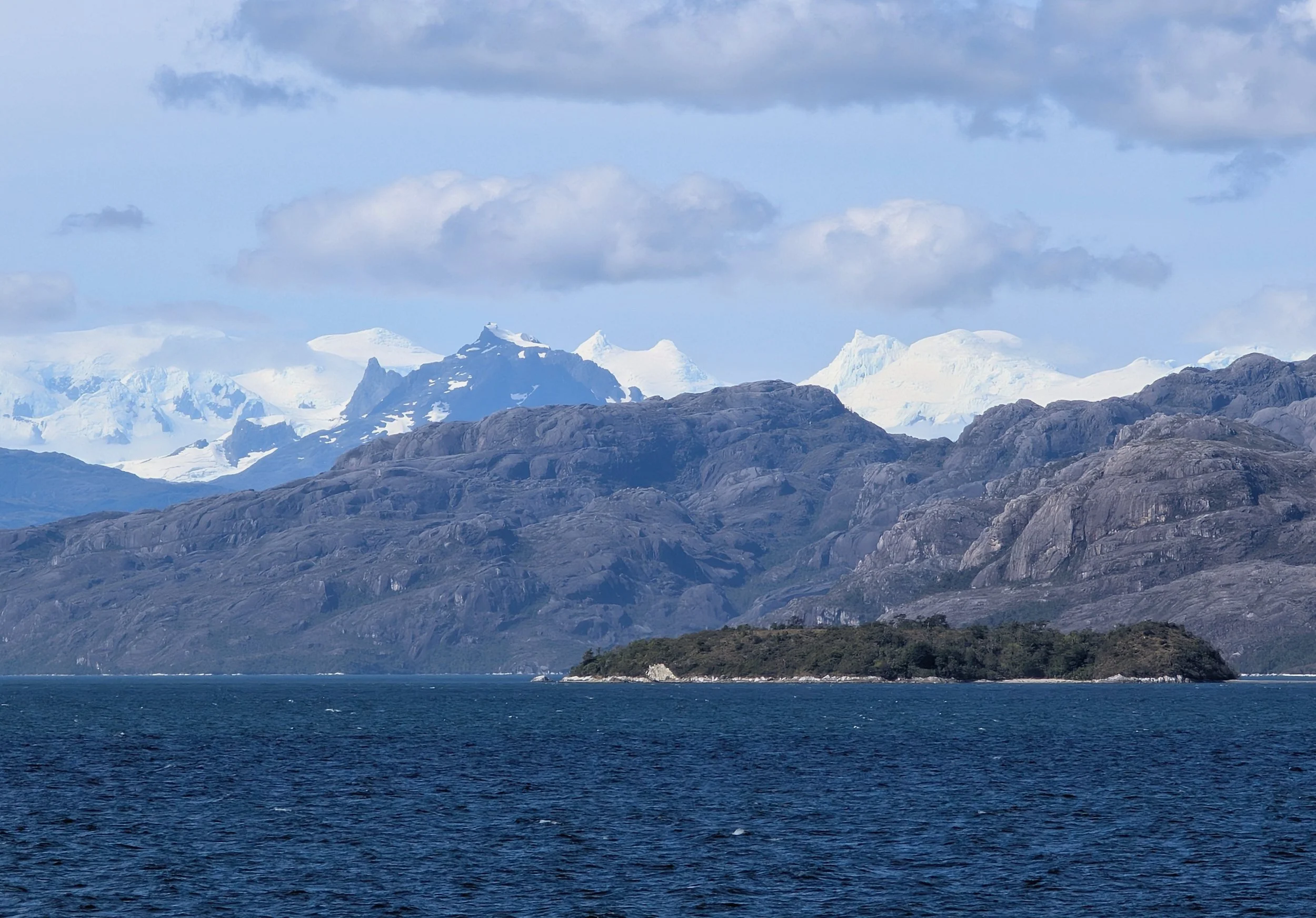
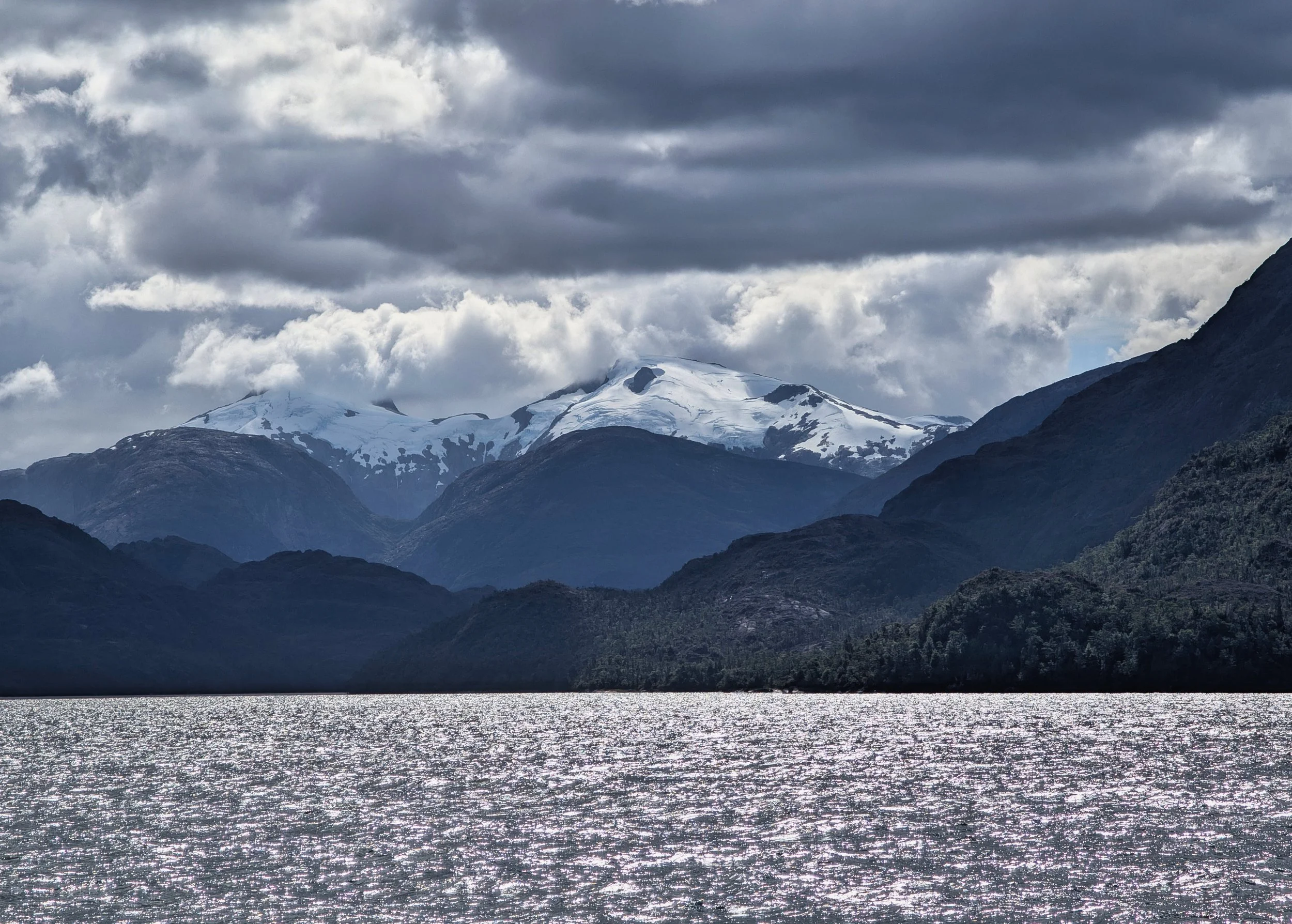
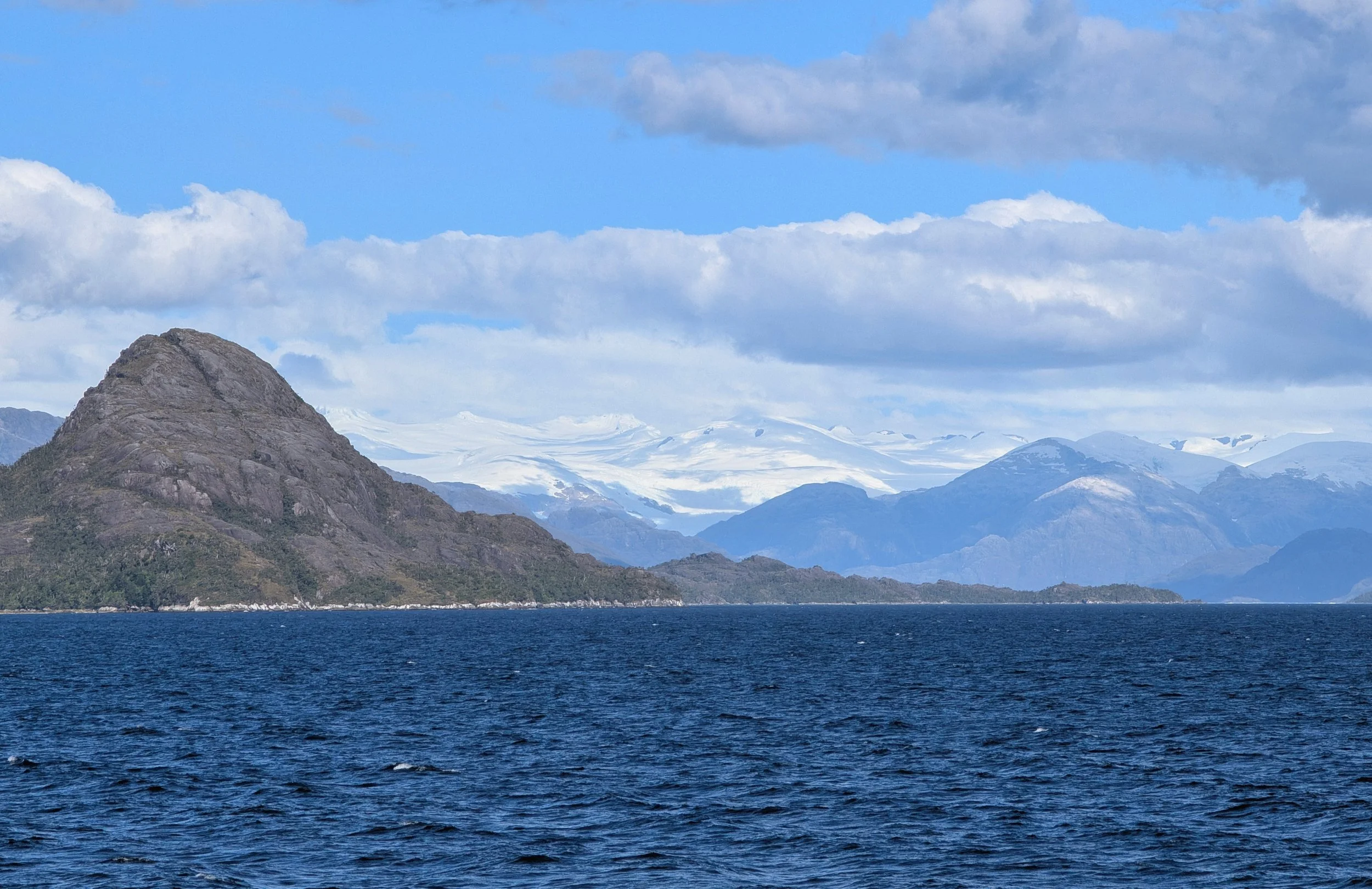
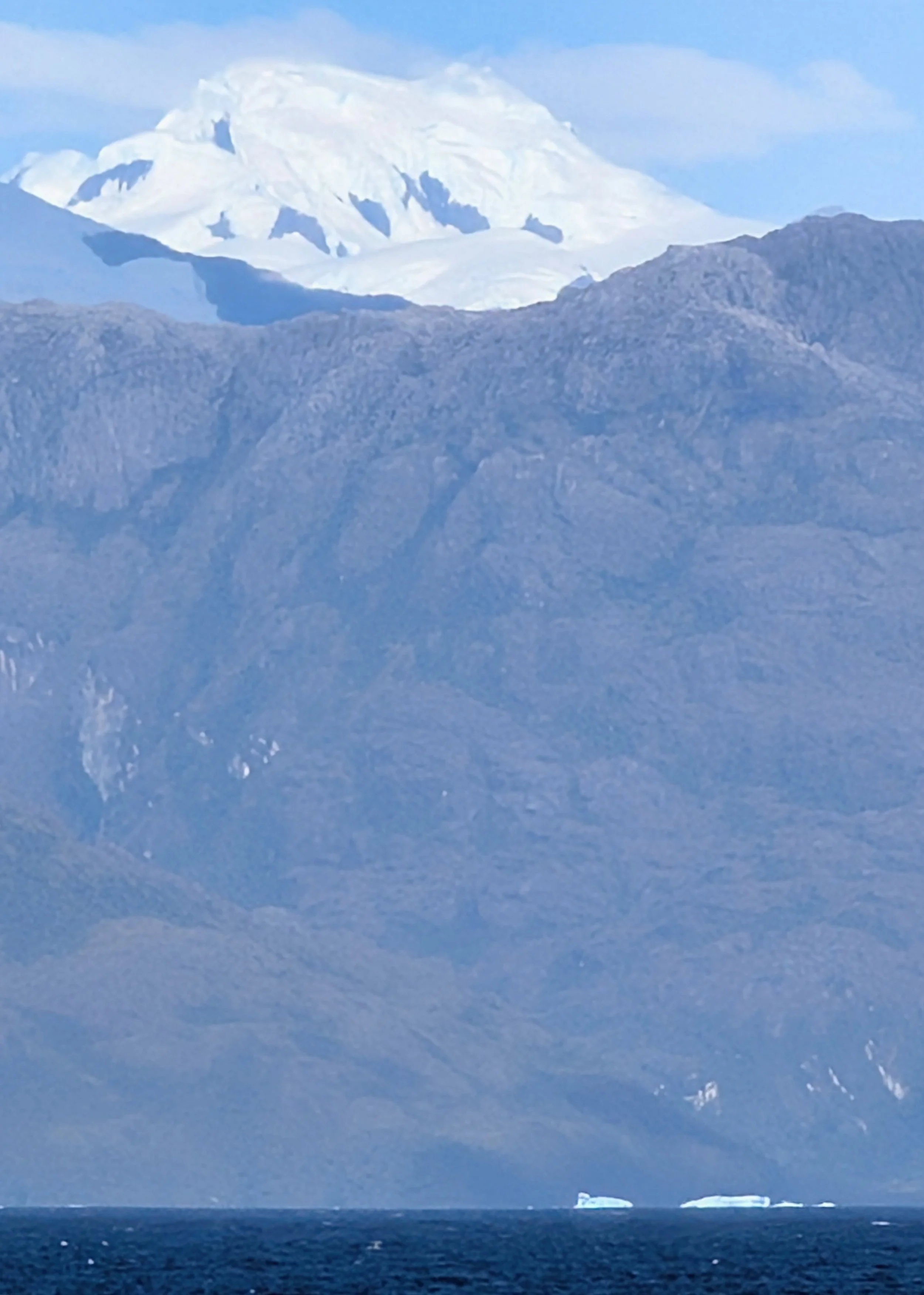
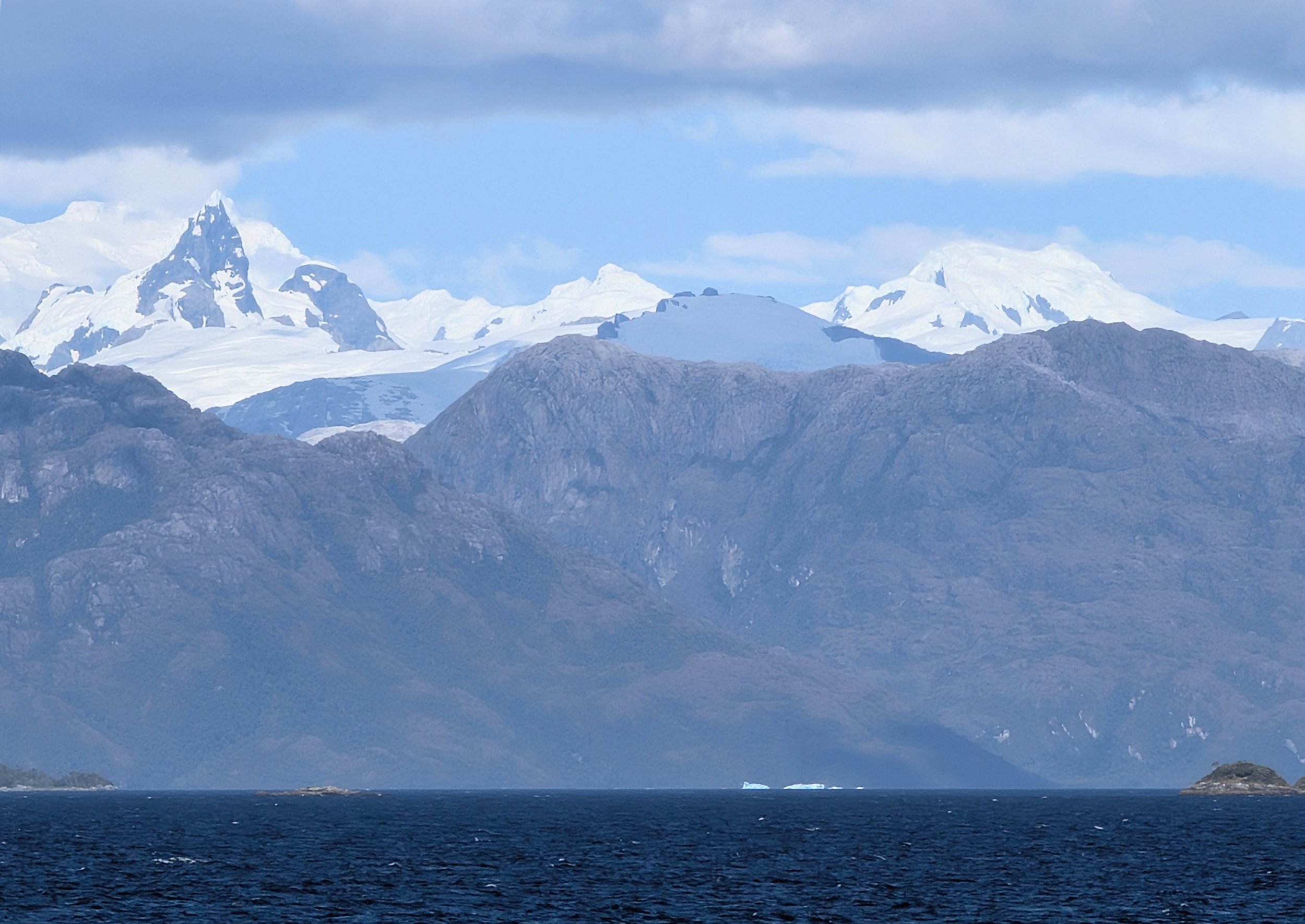
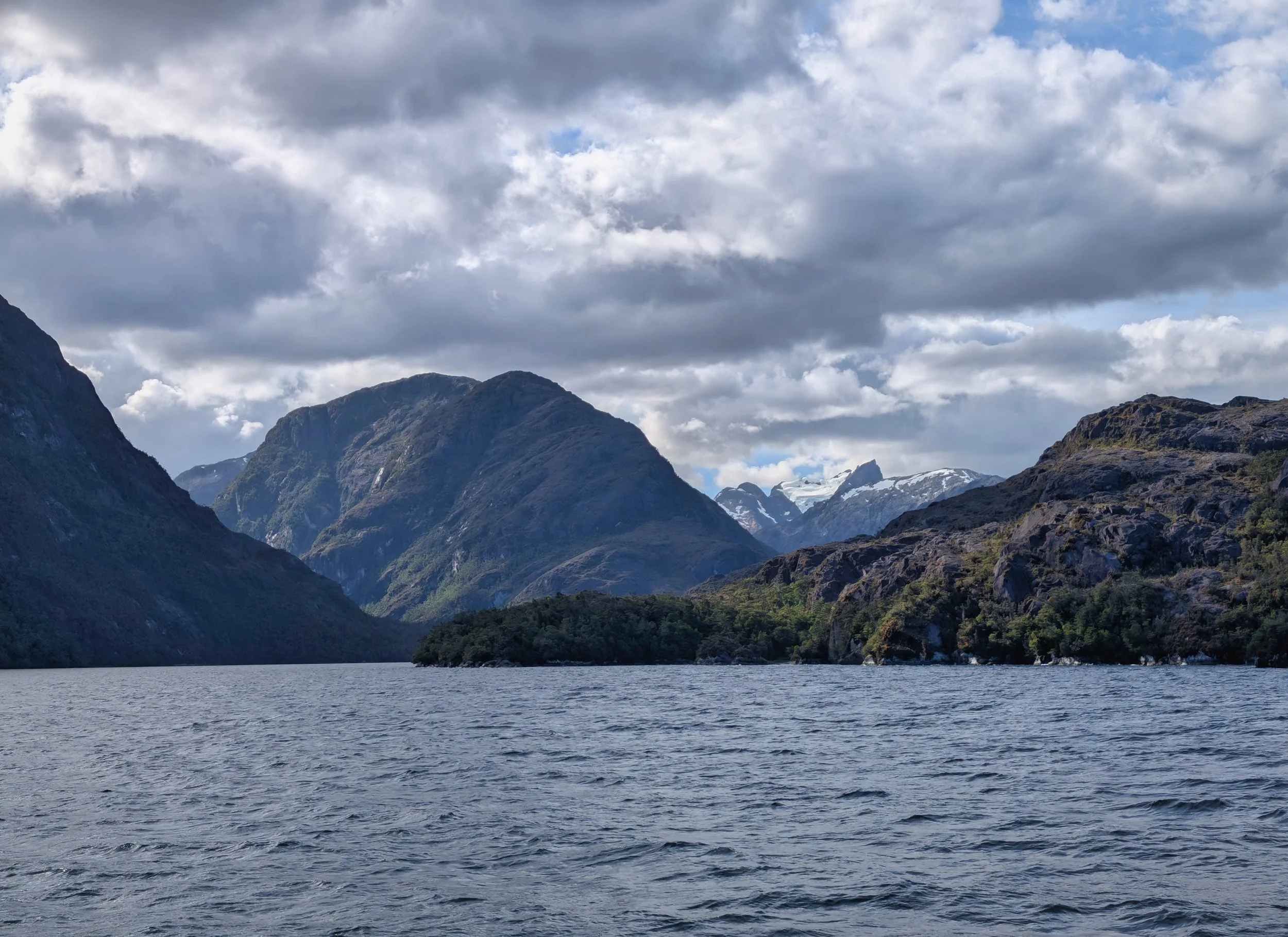

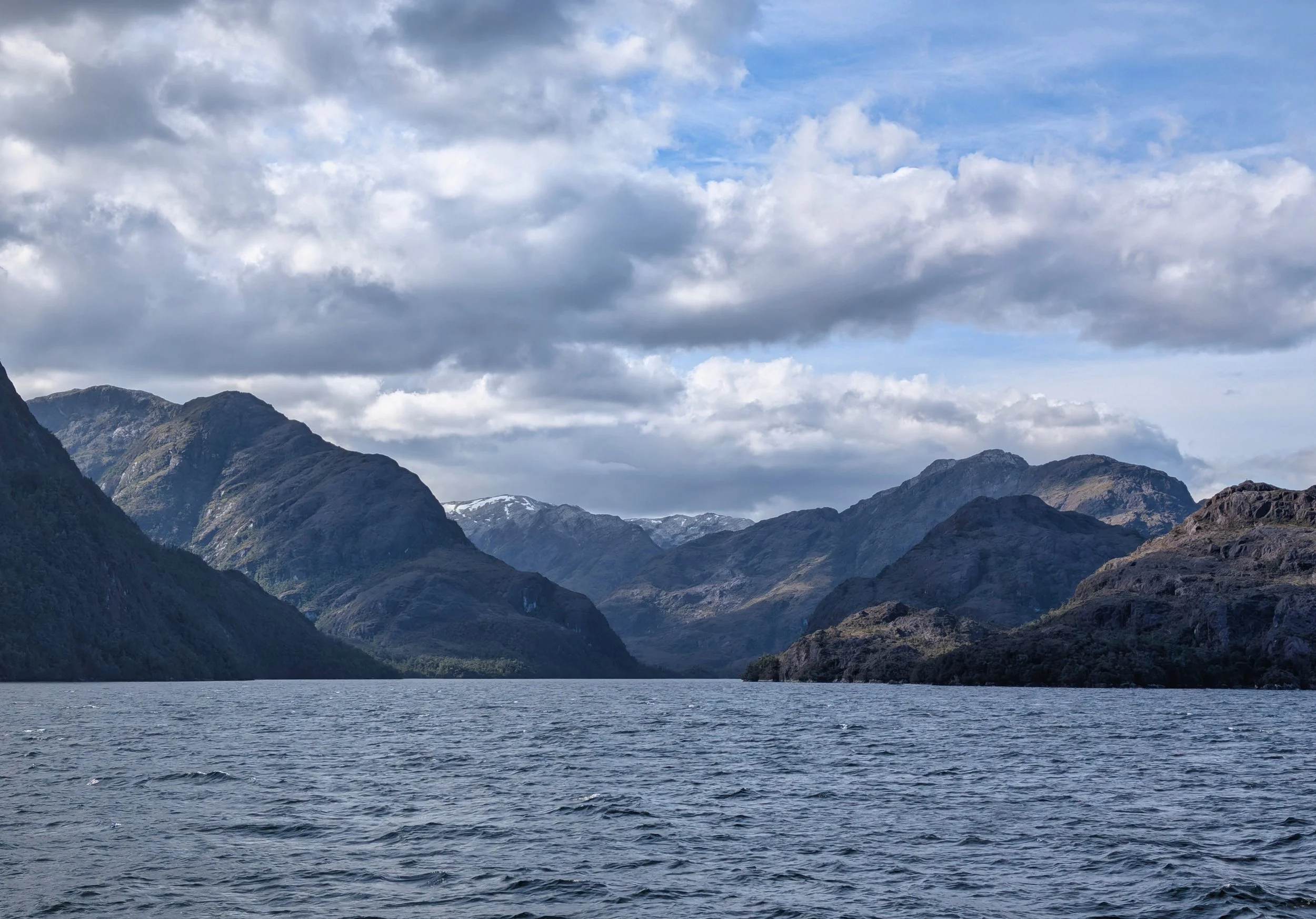
Buenos dias Icefield!
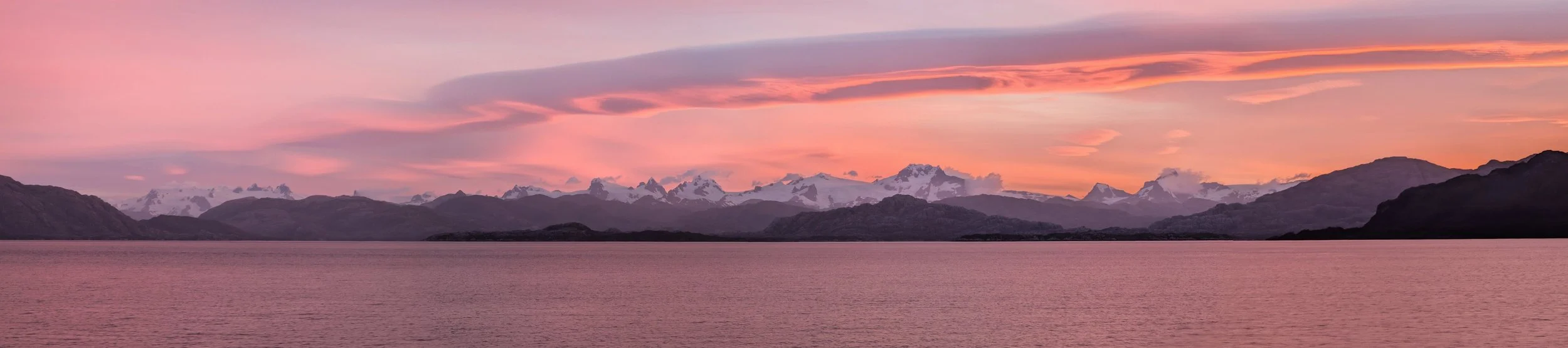
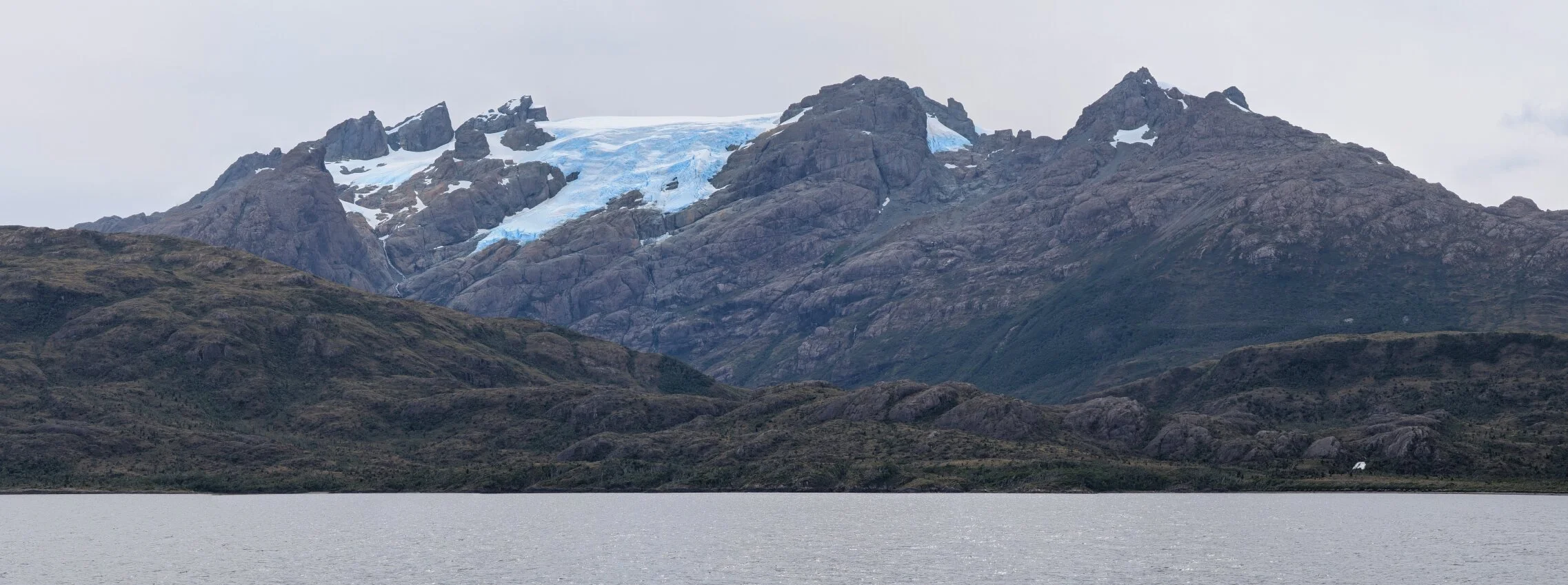
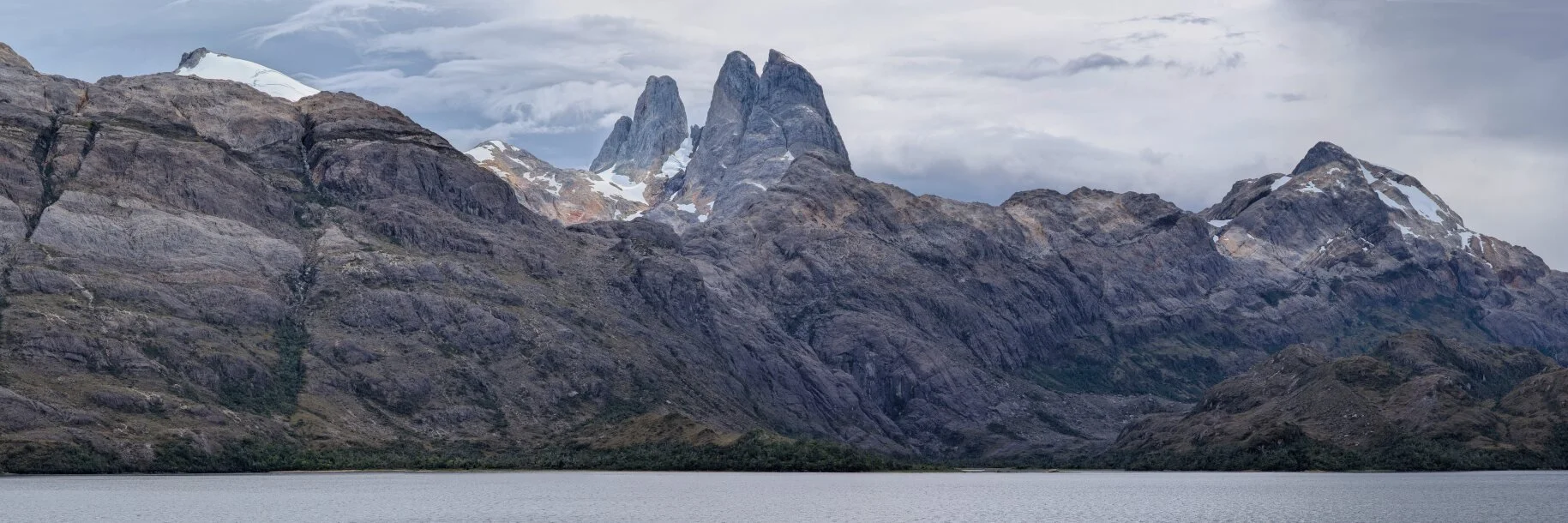
The real star was the landscape. On our last morning Tom had risen early, no real hardship! He was rewarded with a sunrise of such incredible beauty. Then, as the sun rose fully, the dramatic backdrop of glaciers, reflecting blue onto the surface of the water below was simply stunning. We took a diversion up a dead-end fjord, the reason soon became clear, there, dominating the skyline lay Torres del Paine, its iconic and world famous peaks lay before us. We didn't need to brave the thousands of tourists and sky-high entrance fees to see it after all, we felt so blessed.
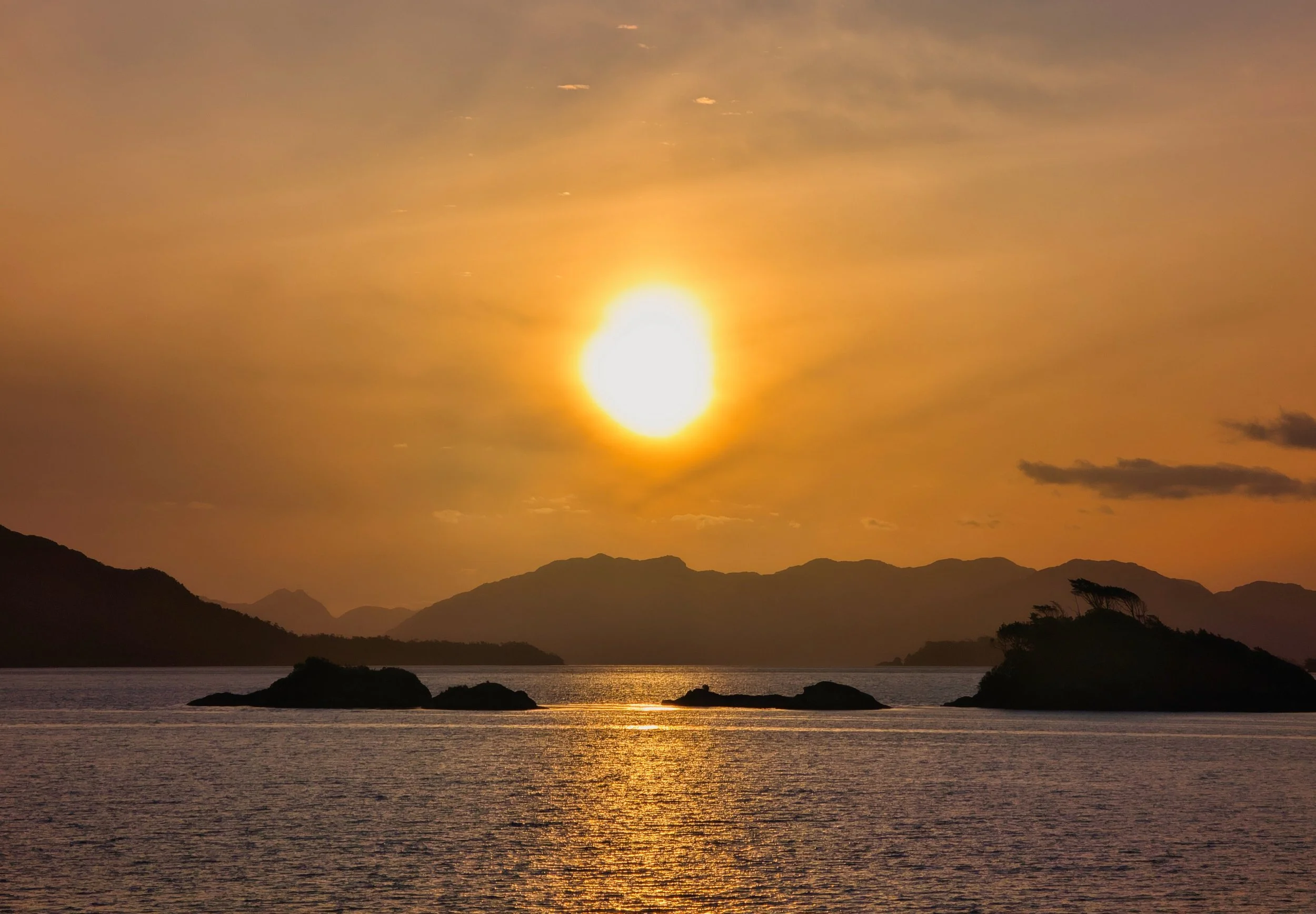
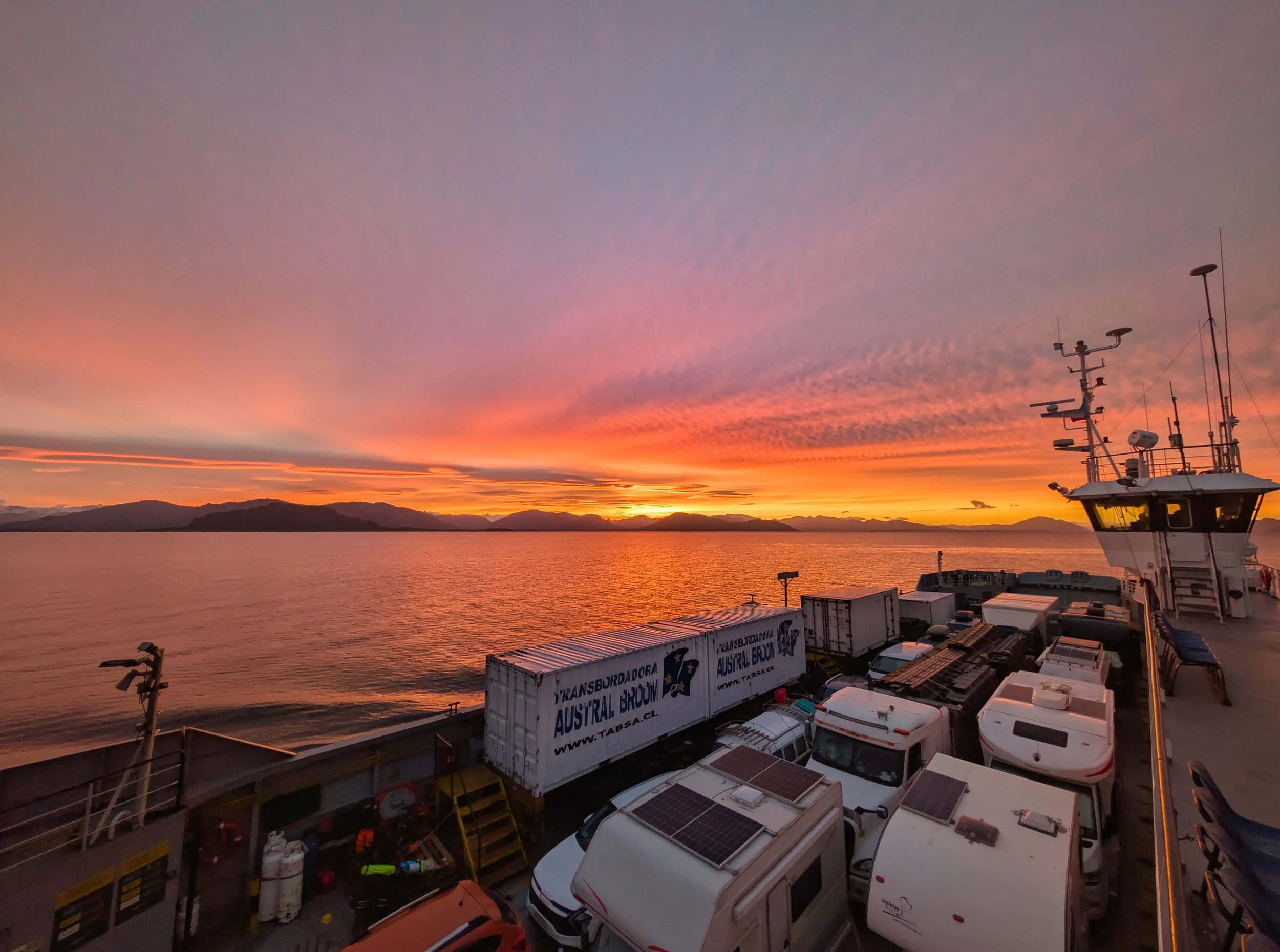
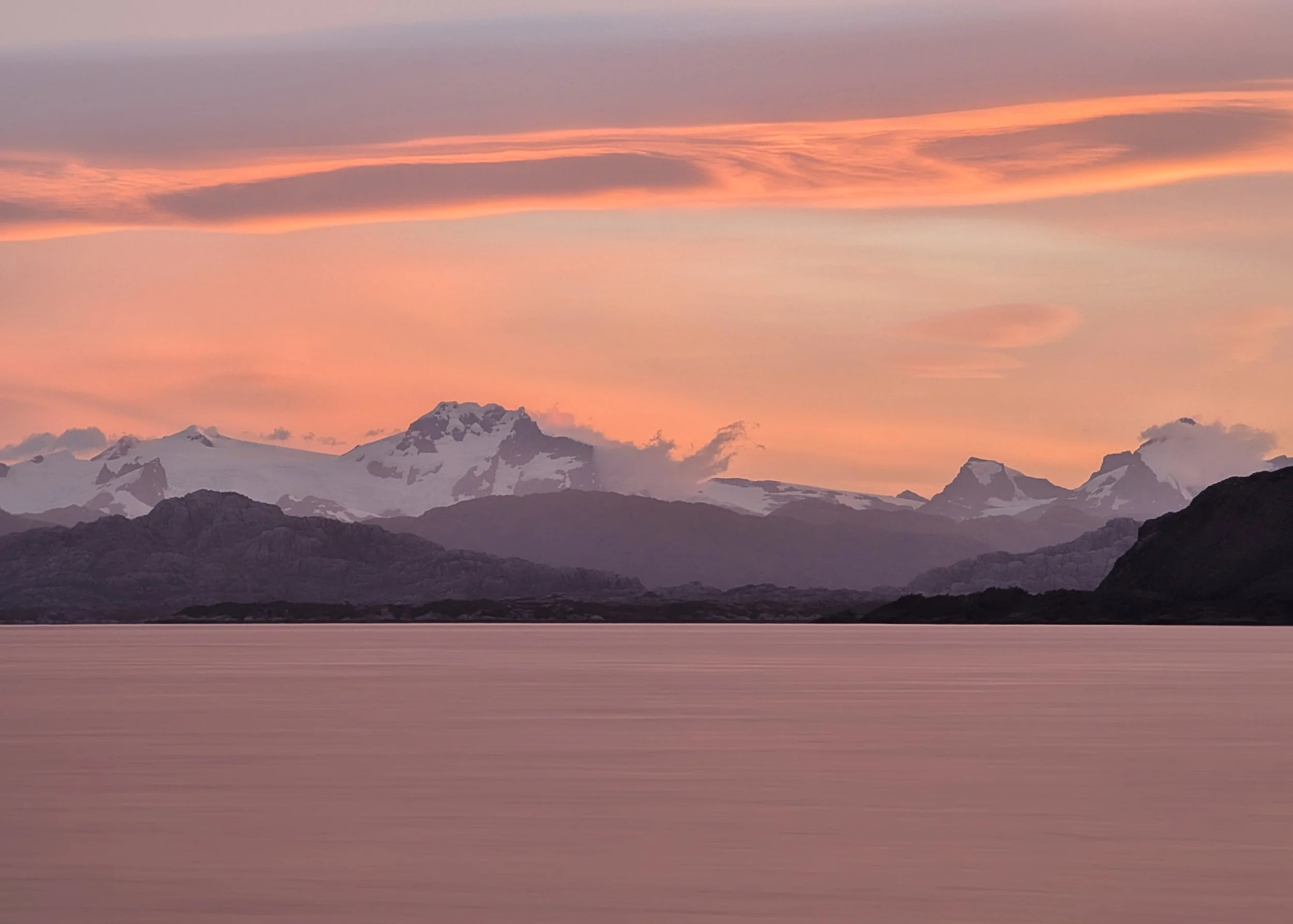
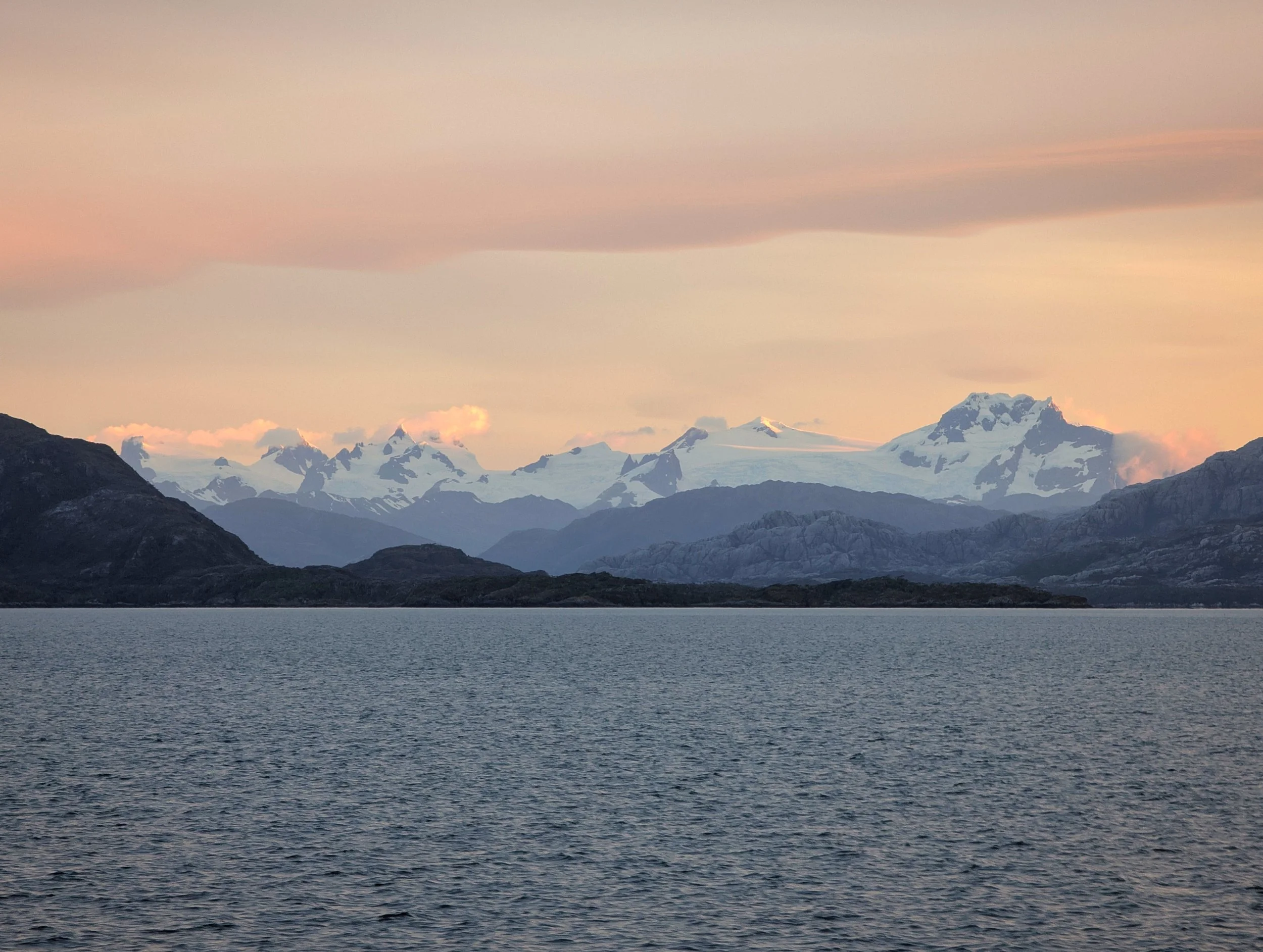
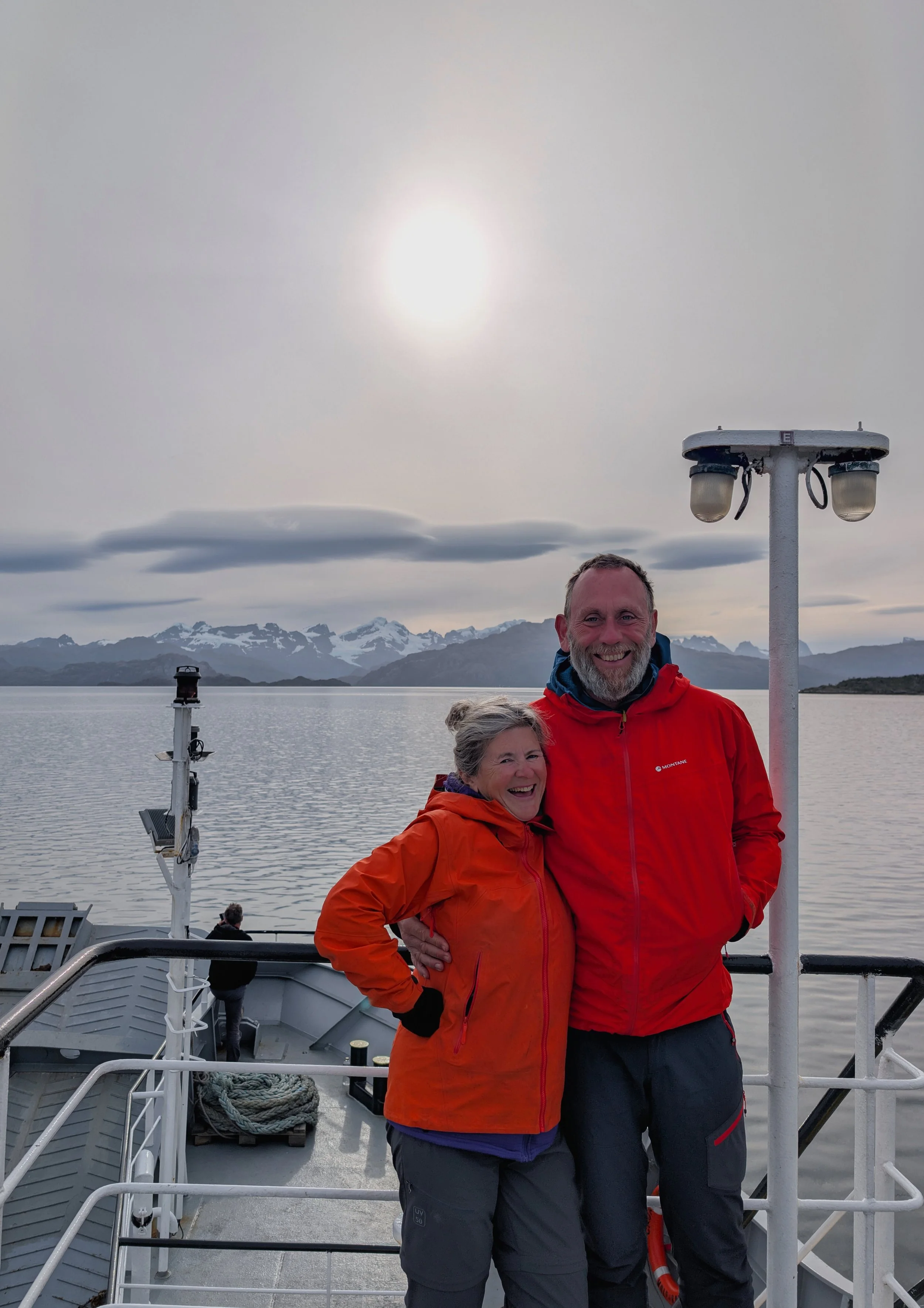
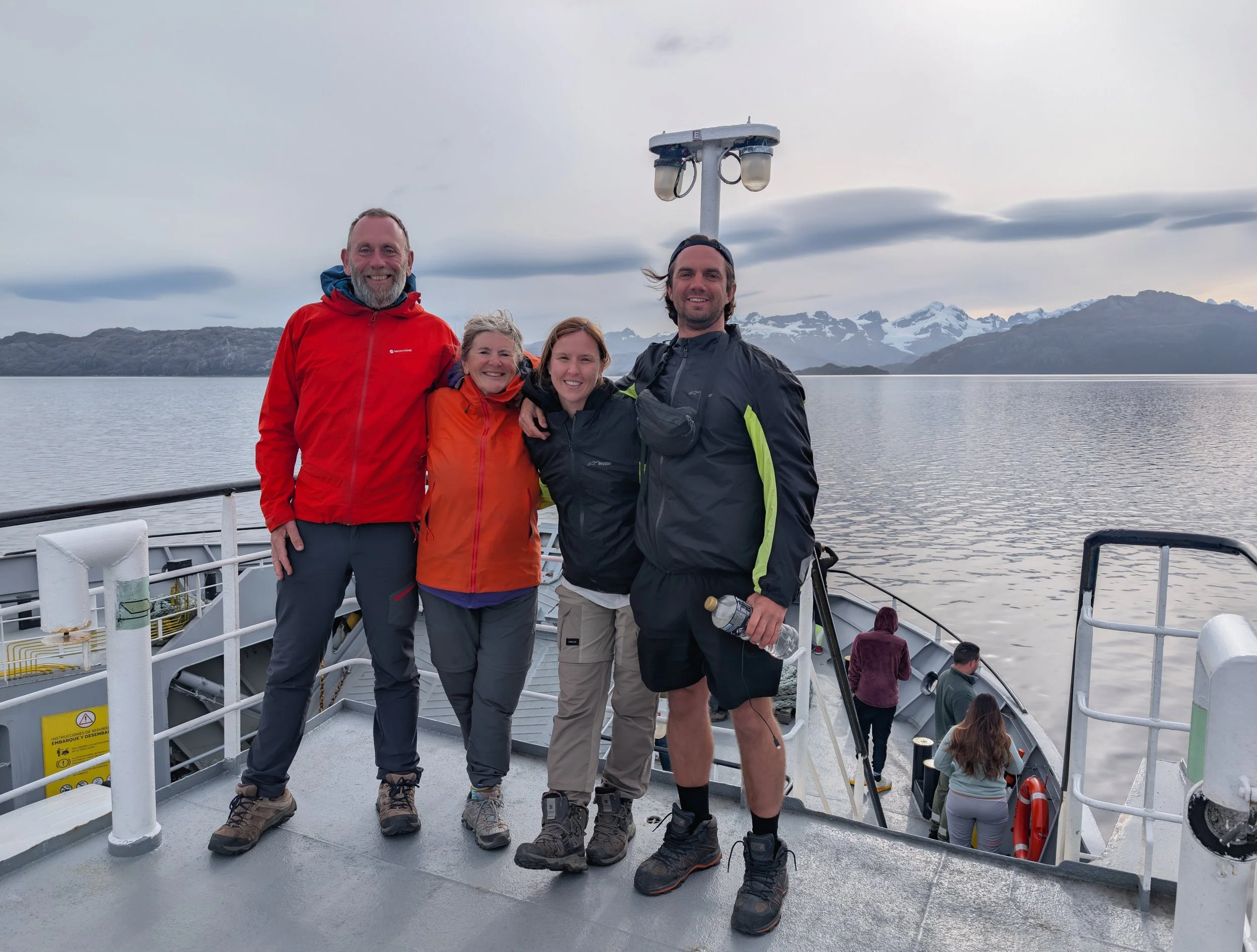
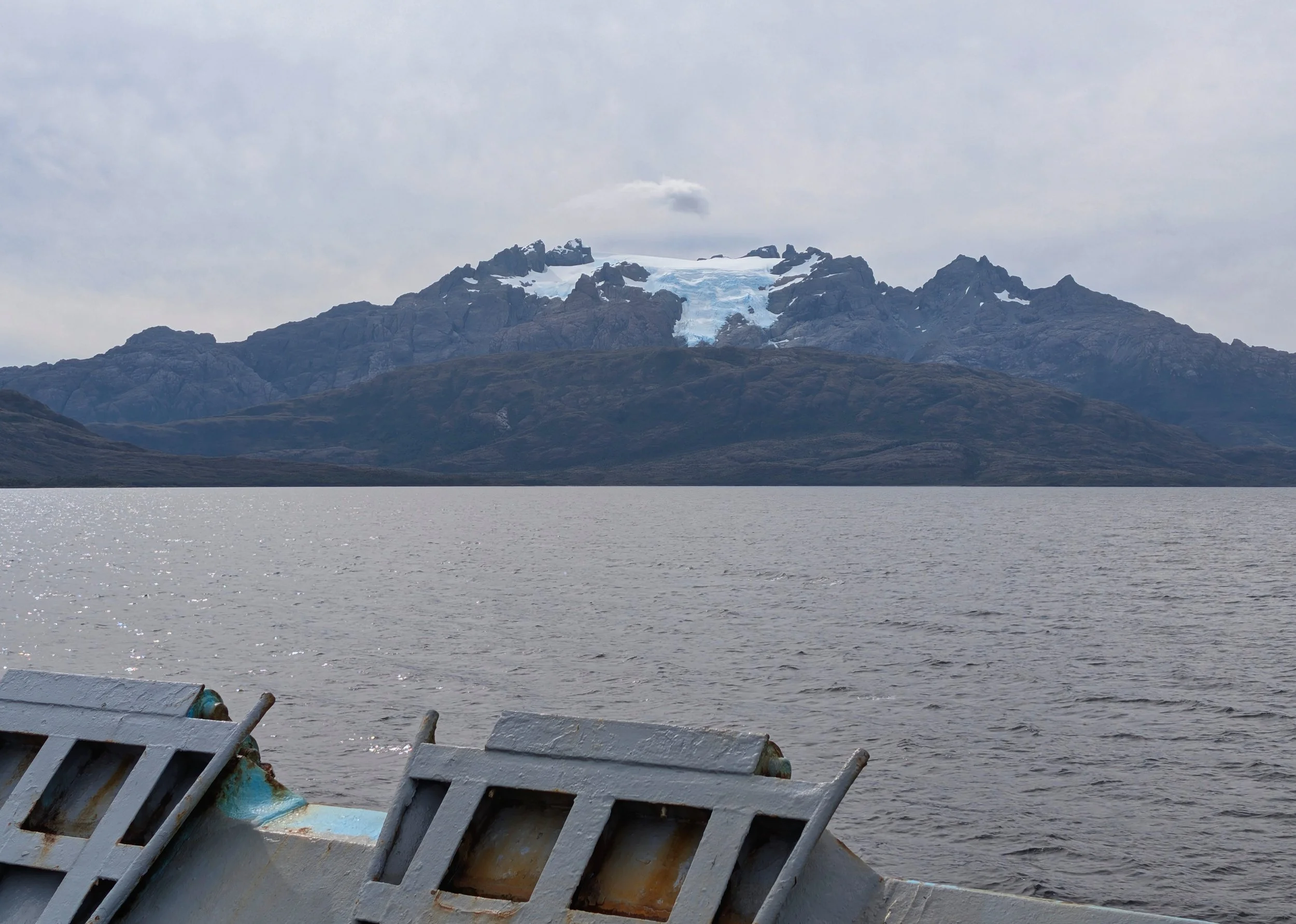
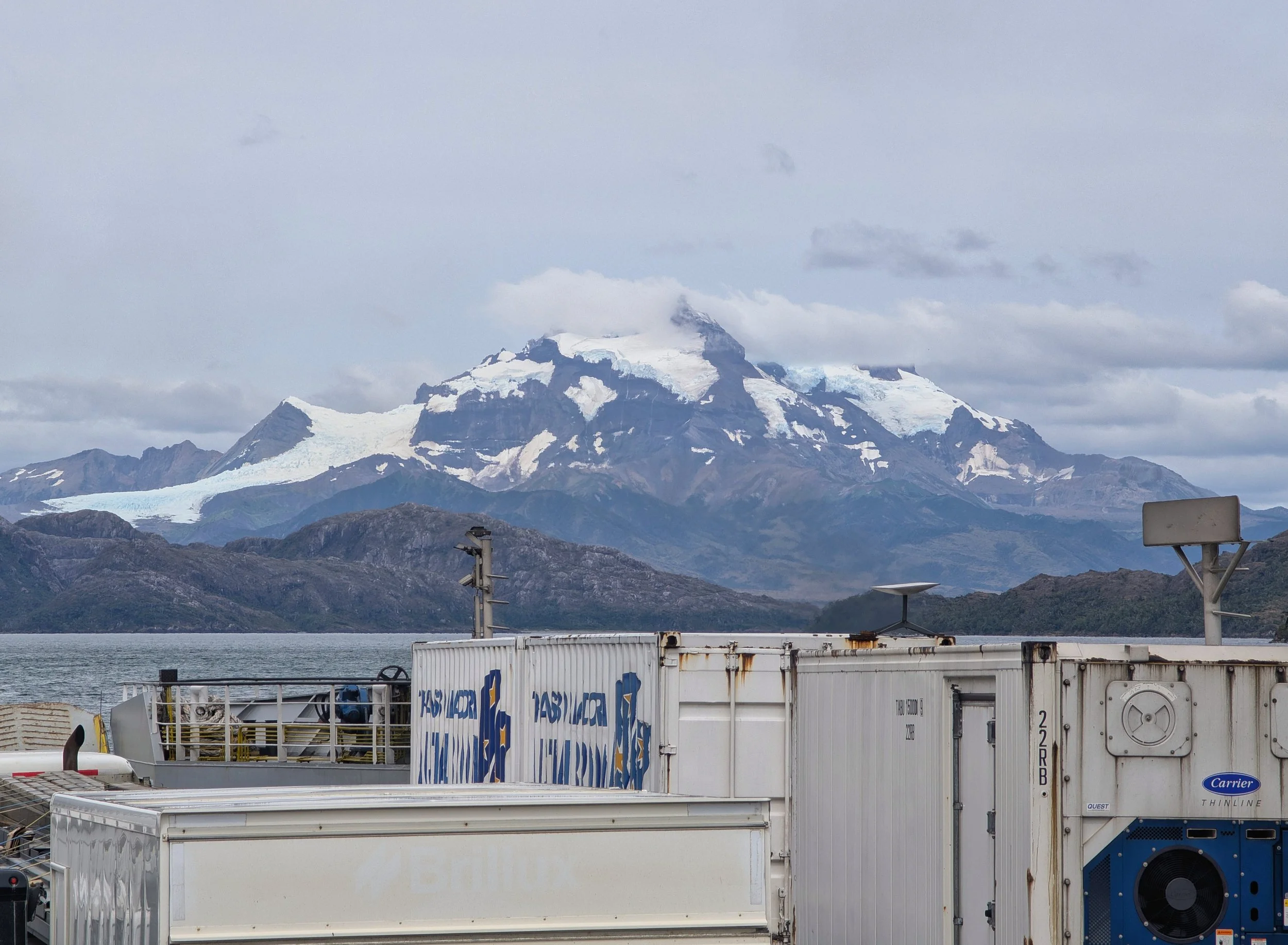
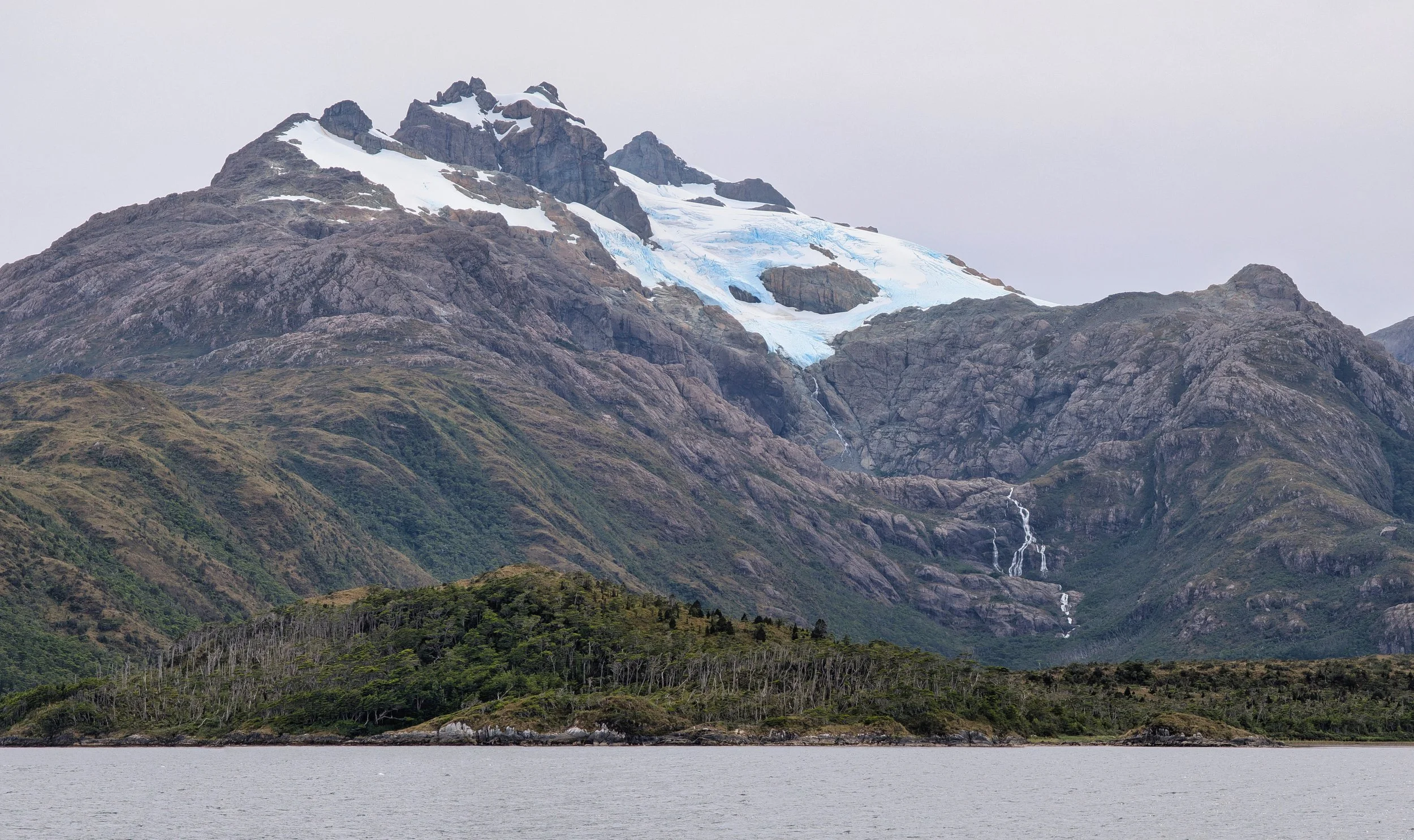
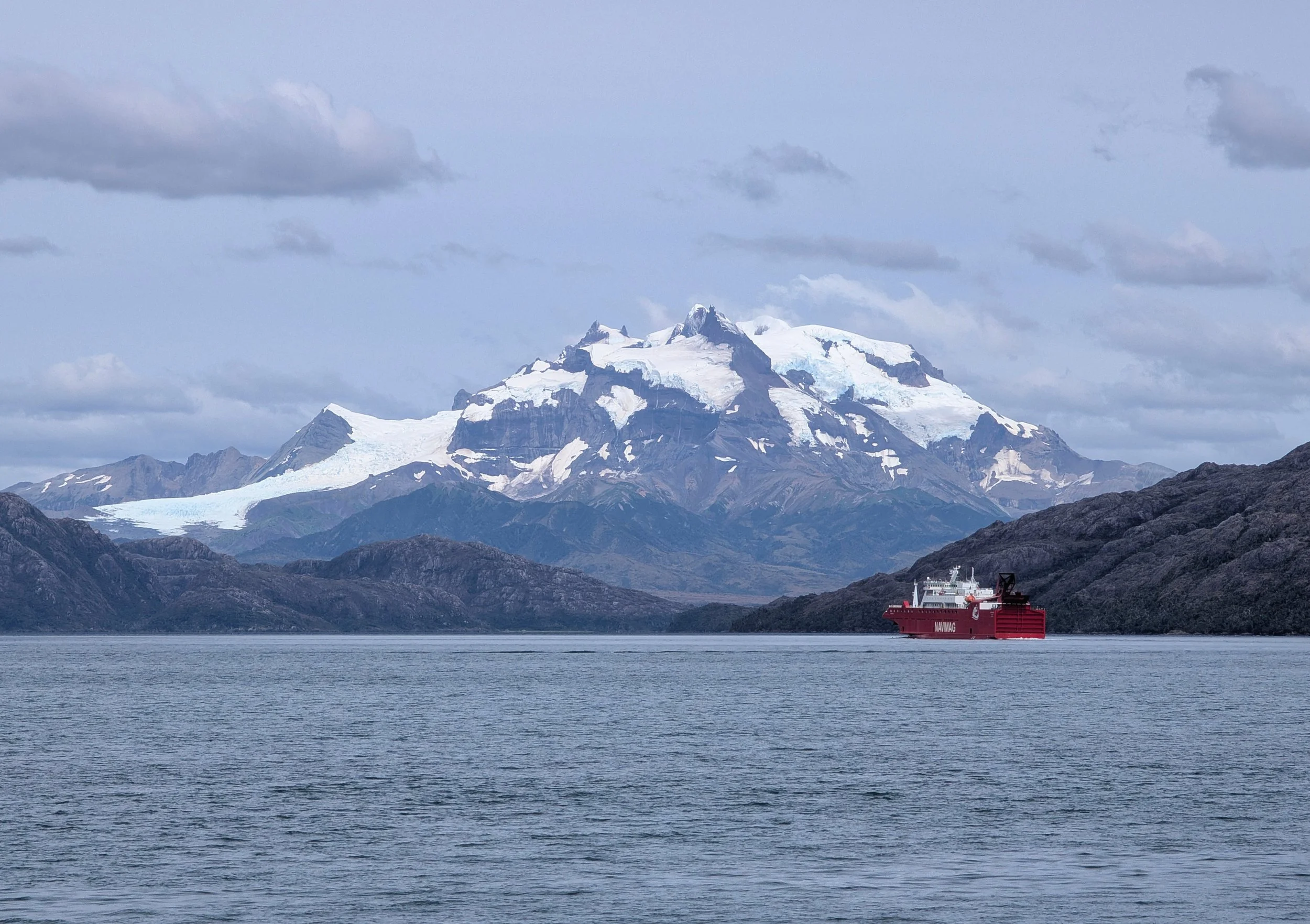
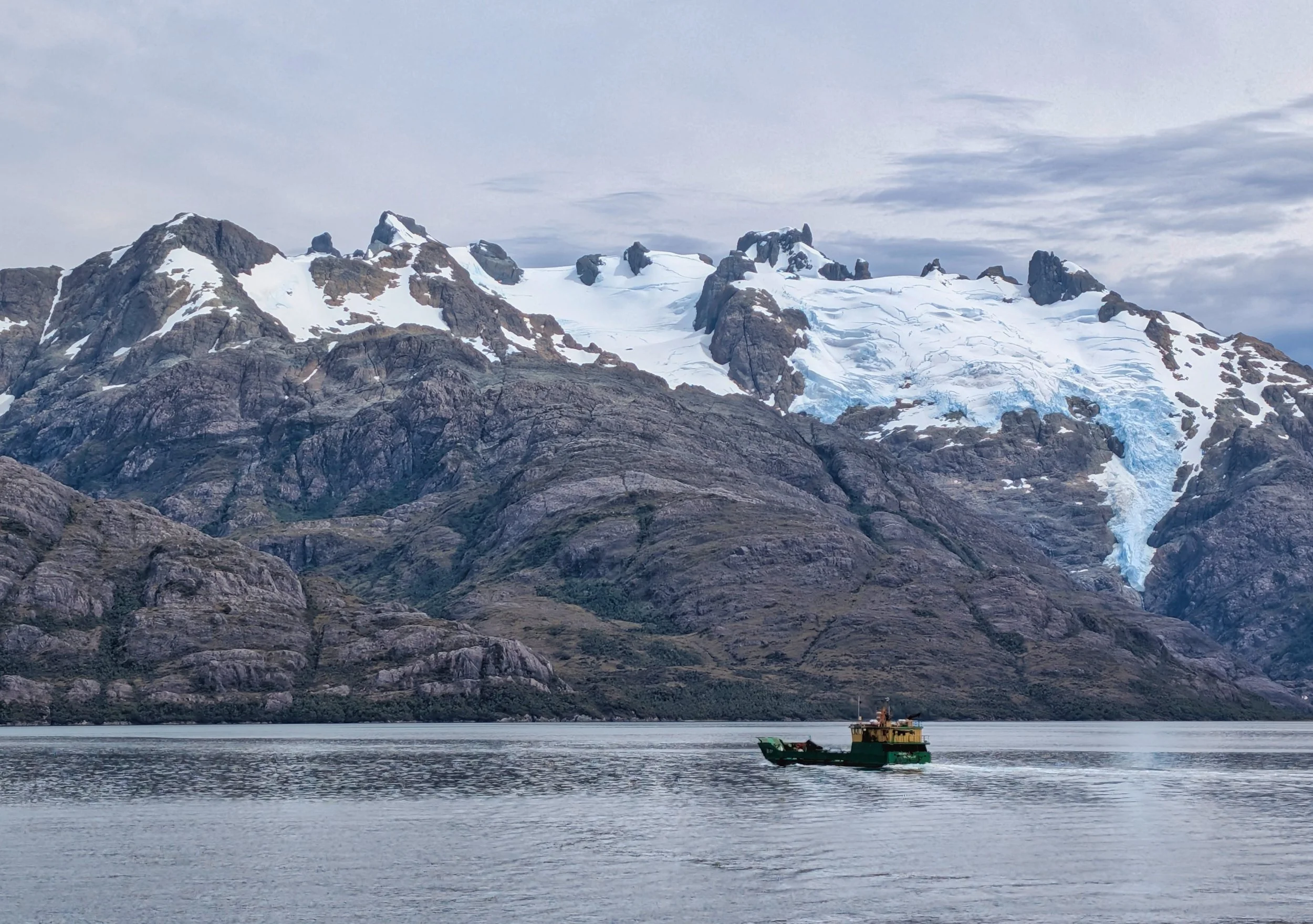
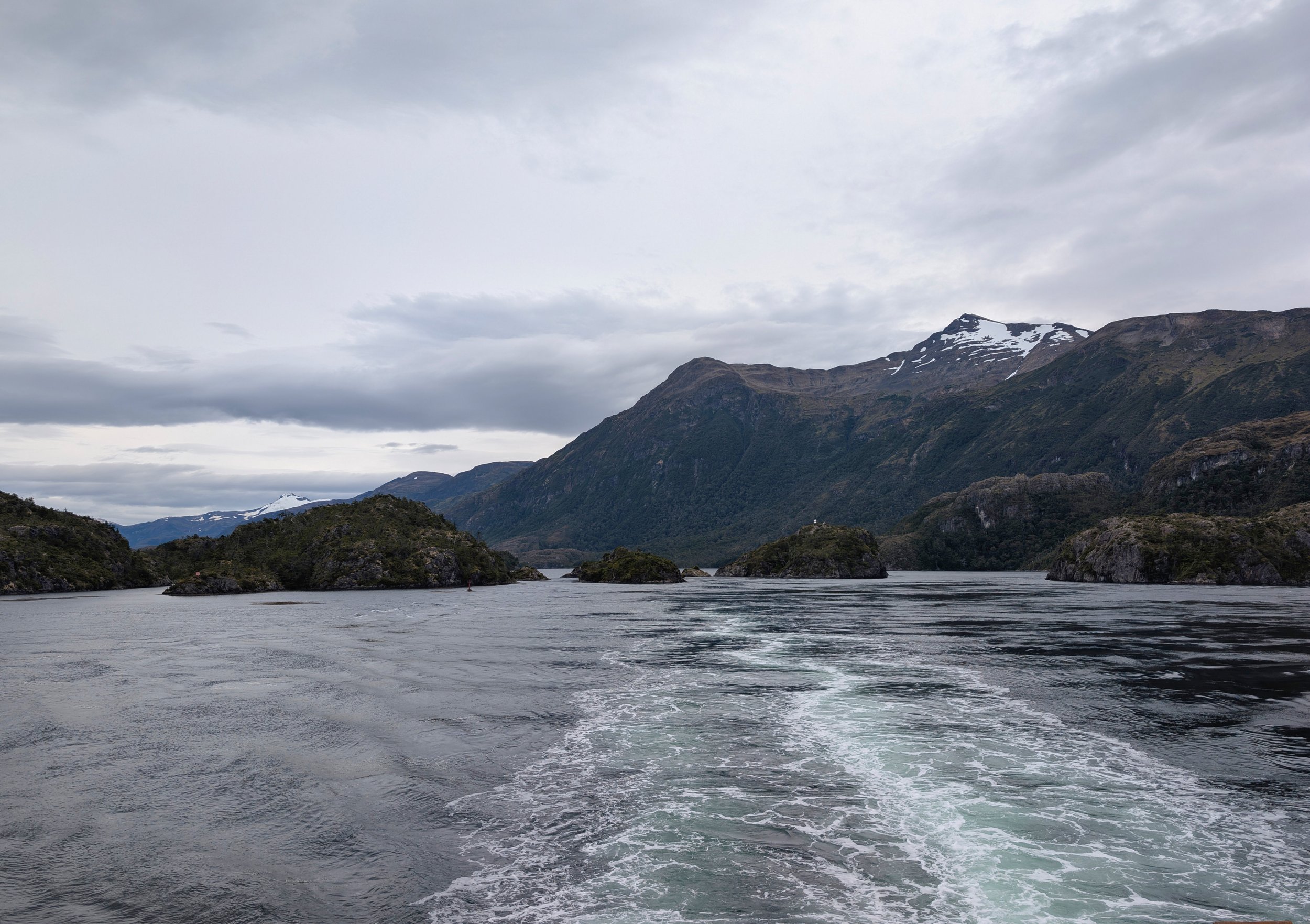
Almost more dramatic than those famous peaks was the massive Glacier at the entrance to the fjord. We spotted the Navimag cruise ship, heading on a 4-day journey up to Puerto Montt and were almost tempted to see if we could book tickets for the next sailing. Our near empty pockets brought us back to reality.
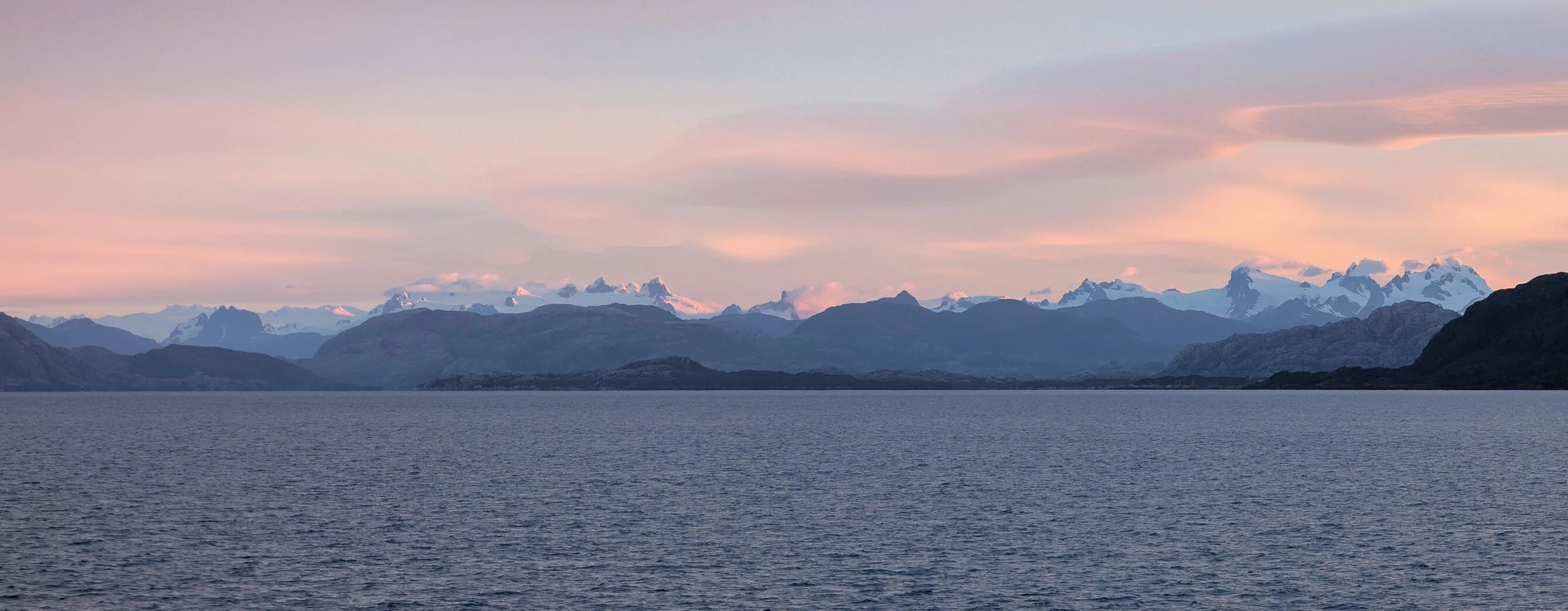
A few panoramas of the views coming up…
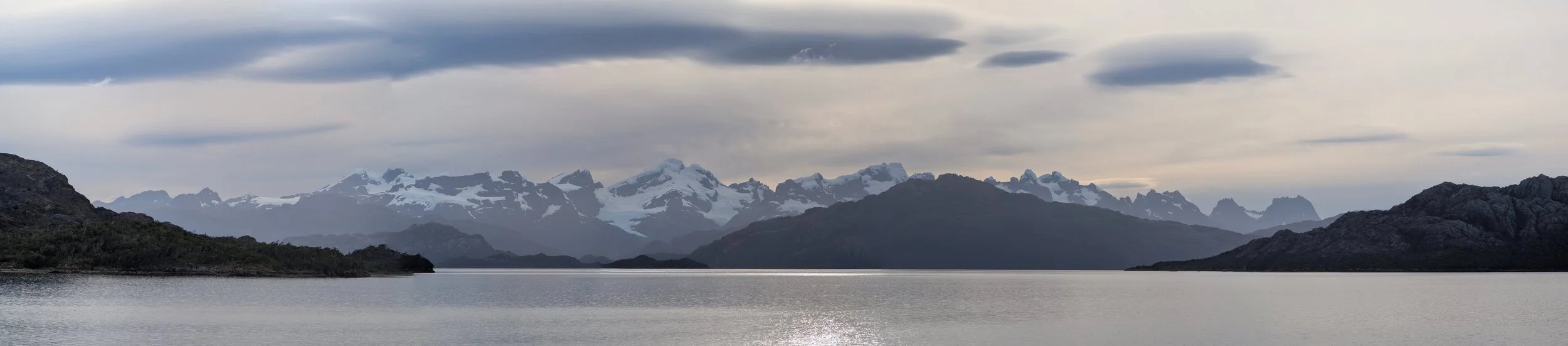
Finally we pulled into our destination, Puerto Natales, almost exactly 48 hours after we’d set off. Our time in Chile is coming to an end. We are not continuing down to Ushuaia. Nearly 500 miles of bleak windblown landscape doesn't appeal. Yes it would be awesome to reach the end of the continent, but there are other places to see and experience. Our problem is, where next?